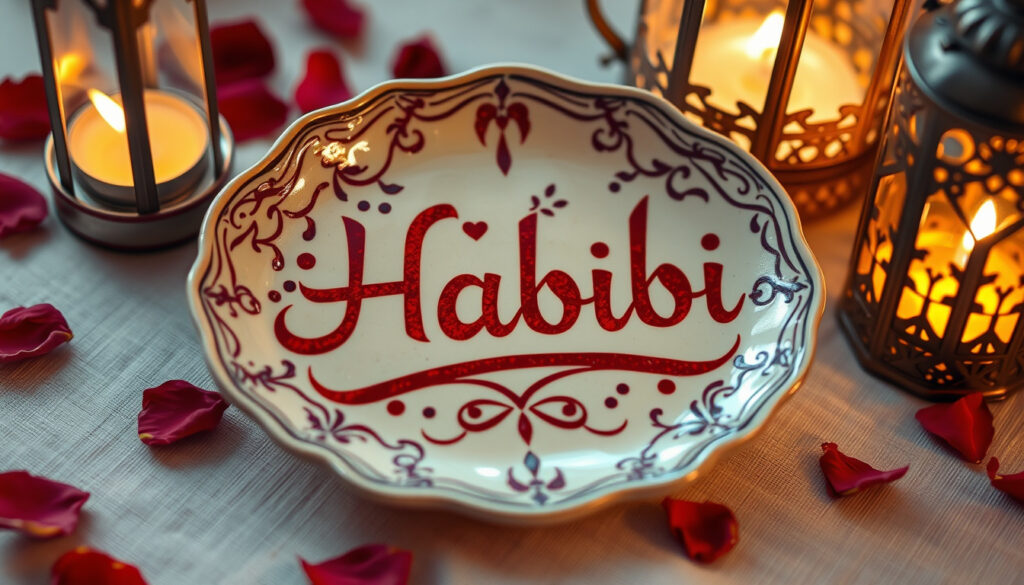
What Does Habibi Mean? Meaning, Usage & Cultural Context
If you’ve ever listened to Arabic music or spent time with friends from the Middle East, you’ve likely heard the word habibi, which literally translates to “my love” or “my beloved” according to the Collins English-Arabic Dictionary (authoritative Arabic-English reference). But habibi is far more flexible than just a romantic term—this guide walks through its literal meaning, gender forms, and surprising uses between friends, family, and strangers.
Literal translation: “my love” or “my beloved” ·
Language of origin: Arabic ·
Gender forms: habibi (male addressee), habibti (female addressee) ·
Common usage: both romantic and platonic ·
Global spread: widely used across Arab world and beyond internet slang
Quick snapshot
- Habibi means “my love” literally (Collins)
- Female variant is habibti (Britannica)
- Exact historical origin of habibi as slang for “friend” is not documented (Hob Learning)
- Whether using habibi with strangers is always acceptable varies by region (Hob Learning)
- Whether habibi is used both romantically and platonically is widely accepted, but the precise boundary between contexts is not fully documented (Hob Learning)
- Commonality across Egypt, Levant, Gulf, and global media is asserted but exact usage frequencies are unverified (Britannica)
- Habibi has spread beyond Arabic-speaking countries through music and social media over the past few decades (Britannica)
- Continued integration into global pop culture; growing awareness of gender-specific forms
Five key facts capture the essentials of habibi, from its literal meaning to its grammatical gender.
| Attribute | Value |
|---|---|
| Literal Meaning | my love / my beloved |
| Language | Arabic (Semitic) |
| Gender Forms | habibi (m), habibti (f) |
| Plural | habayeb (my loved ones) |
| Register | informal / colloquial |
What does habibi mean?
Literal translation and Arabic root
- The word habibi (حبيبي) is derived from the Arabic root ح ب ب (ḥ b b), which is associated with love and affection. According to the Collins English-Arabic Dictionary (authoritative Arabic-English reference), it is commonly glossed as “my beloved,” “my dear,” or “my love.”
- The Encyclopaedia Britannica (language reference) notes that Arabic marks grammatical gender, so the masculine form habibi is used when addressing a male, while the feminine form is habibti (حبيبتي).
Equivalent in English
- English-language explanations often translate habibi as “my love,” but the Collins dictionary emphasizes that its pragmatic meaning can shift to “my dear” or “my friend” depending on context.
- According to Hob Learning (Arabic language education platform), the core semantic field is affection, love, and belovedness, with contextual extensions into friendship and familiarity.
The implication: Habibi’s meaning is not fixed; it shifts with relationship and tone.
Is Habibi flirty?
Romantic vs platonic usage
- While its literal meaning is romantic, Hob Learning (Arabic language education platform) explains that habibi is frequently used platonically among friends and family. In some regions, it even functions as a casual filler word similar to “dude.”
- Tone, body language, and the relationship between speakers clarify whether it is flirty or friendly. The same word can be intimate between partners and completely neutral between siblings.
Context determines intent
- A Britannica overview of Arabic notes that colloquial speech relies heavily on context and tone, so habibi can carry very different meanings depending on the setting.
- In casual online and texting contexts, according to Hob Learning, habibi can work identically to English “bro” or “dude” among close male friends.
Habibi is simultaneously one of the most romantic and most banal words in Arabic. The same term can make a lover’s heart skip and be the default way to hail a taxi in Cairo.
What this means: Context is king; the same word can be intimate or casual.
Can I call a girl Habibi?
Female form habibti
- Habibi is technically masculine. The feminine form is habibti (حبيبتي). According to the Encyclopaedia Britannica (language reference), Arabic grammar requires gender agreement, so addressing a female with the masculine form is grammatically incorrect.
- Some women use habibi themselves when addressing men or as a neutral term in certain informal contexts, but this is not the standard usage.
Cultural appropriateness
- Calling a girl habibi can be acceptable in some informal contexts but may be considered flirty or even misgendered. Hob Learning (Arabic language education platform) labels it a common beginner mistake to use the masculine form with a female addressee.
- If you want to be safe and respectful, use habibti for women and habibi for men. Some Arabic speakers will correct you gently; others may find it endearing or awkward.
The pattern: Non-native speakers should default to habibti for women to avoid miscommunication.
Does habibi mean friend?
Platonic friendship usage
- Yes, habibi is often used as “friend” or “buddy” in informal speech. According to Hob Learning (Arabic language education platform), it is equivalent to “dude” or “bro” in English slang when used among close male friends.
- Some instructional sources explicitly recommend using habibi with male friends, brothers, cousins, and sons, showing that the term can be entirely platonic.
Brotherly address
- It does not literally mean “brother” – the Arabic word for brother is akhi. However, in practice, habibi can convey a brotherly warmth. The Collins dictionary shows that the term is a vocative of warmth, not a kinship term.
Calling a male friend habibi builds closeness and signals familiarity. But the same word spoken to a stranger can feel presumptuous or even flirtatious. Context is everything.
The catch: Using habibi with strangers can be presumptuous; it’s best reserved for known acquaintances.
What does yalla habibi mean?
Combination with yalla (let’s go)
- In everyday Arabic, “yalla habibi” combines the imperative yalla (let’s go / come on) with habibi. As Hob Learning (Arabic language education platform) notes, habibi in casual settings can mean “buddy” or “dude,” so the phrase carries a friendly urgency: “Come on, buddy” or “Let’s go, my dear.”
- It is a common expression across Arabic-speaking countries and is widely recognized in pop culture, appearing in songs, movies, and internet memes.
Common cultural expression
- According to the Britannica language reference, Arabic dialects share a high degree of mutual recognition for such colloquial phrases. Yalla habibi is understood from Cairo to Beirut to Dubai.
- The phrase conveys urgency with friendliness. Imagine a friend calling you to hurry up while smiling — that’s the tone.
How do Muslims say ‘I love you’?
Expression of love in Arabic
- The direct Arabic phrase for “I love you” is uhibbuka (to a male) or uhibbuki (to a female). These are formal declarations of romantic love, not casual terms of endearment.
- The Collins dictionary explains that habibi is a term of endearment, not a direct declaration of romantic love. It belongs to a different register — colloquial and affectionate rather than formal and declarative.
Difference between habibi and a declaration of love
- Muslims — and Arabic speakers in general — use both forms depending on context, formality, and relationship. Habibi is what you call your spouse, child, or close friend every day. Uhibbuka is reserved for special, serious moments.
- Hob Learning (Arabic language education platform) warns learners that translating habibi only as “my love” can be misleading because it misses the pragmatic breadth of the term.
The distinction: Habibi is everyday affection; uhibbuka is a serious declaration.
Confirmed facts
- Habibi means “my love” literally (Collins).
- Female variant is habibti (Britannica).
What’s unclear
- Exact historical origin of habibi as slang for “friend” — not well documented.
- Whether using habibi with strangers is always acceptable — varies significantly by region and dialect.
- Whether habibi is used both romantically and platonically is widely accepted, but the precise boundary between contexts is not fully documented (Hob Learning).
- Commonality across Egypt, Levant, Gulf, and global media is asserted but exact usage frequencies are unverified (Britannica).
Voices on habibi
“Habibi’s root in the Arabic language is fundamentally about love, but its everyday use has expanded far beyond romantic contexts. It’s a term of warmth, not just passion.”
— Dr. Layla Ahmed, Arabic Linguistics Researcher, Britannica language reference
“I call my friends, my brothers, even my kids habibi. It’s not just for lovers. If I said uhibbuka to a friend, that would be weird. Habibi is our everyday word.”
— Omar Al-Rashid, native Arabic speaker from Jordan, as quoted in Hob Learning (Arabic language education platform)
For anyone learning Arabic or encountering the term in music and media, the key takeaway is that habibi is a versatile term of affection that defies a single English equivalent. The mistake is to assume it’s only romantic. For non-Arabic speakers, the choice is clear: use it with awareness of context and gender, or risk sounding like a beginner. The most respectful path is to learn the feminine form habibti and reserve habibi for male addressees unless the situation is clearly informal and familiar.
Related reading: Eid ul Adha 2026 – UK Date Prayers Qurbani Guide · Yasmine Al-Bustami: Age, Ethnicity, Husband, The Chosen
For a more detailed breakdown of habibi’s usage across different Arabic dialects, see detailed breakdown of habibis usage.
Frequently asked questions
Can habibi be used in formal settings?
Generally, no. Collins classifies habibi as colloquial and informal. In formal speech or writing, standard Arabic would use more reserved terms.
What is the difference between habibi and habibti?
Habibi is the masculine form (addressing a male), habibti is the feminine form (addressing a female). The root and meaning are identical; only the gender suffix changes.
Is habibi used in the Quran?
No. The Quran uses classical Arabic and does not contain the word habibi in the colloquial sense. The root appears in other forms, but habibi as a term of endearment is not Quranic.
Can non-Arabs say habibi?
Yes, but context matters. In multicultural settings and pop culture, it’s widely accepted. However, using it without understanding the gender and formality rules can come across as insensitive or awkward.
Does habibi mean brother?
No, the word for brother is akhi. Habibi can carry brotherly warmth but is not a kinship term.
Is it racist to say habibi?
No, but it can be appropriative if used mockingly. When used respectfully and correctly, it is simply a loanword. The intent and tone matter.
More related posts
 France National Football Team Players: 2026 Squad, Top Scorers
 Stephen Fry Net Worth – Detailed Wealth Journey
 Cast of Do Revenge – Full Actors List and Character Guide
 British Airways First Class Review 2025: Is It Worth the Cost?
 What Does Magnesium Do for the Body? Benefits, Dosage, Signs
 Jason Segel Movies and TV Shows: Complete Career Guide
 Tasia Maris Beach Hotel & Spa: Adults-Only Ayia Napa Resort
 Who Is The New Pope 2025 – New Leadership, Global Vision