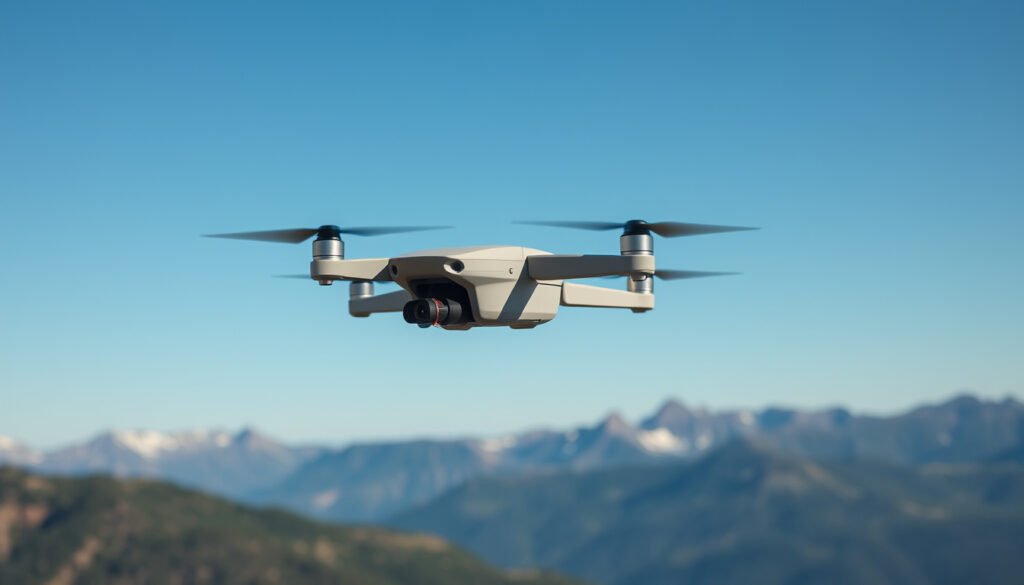
DJI Mini 3 Pro: Specs, Price, Comparisons in 2024
If you’ve been eyeing a drone for landscape photography, the DJI Mini 3 Pro keeps coming up — and with good reason. Released in May 2022, it was pitched as the first compact drone that serious photographers could actually take seriously, packing 48MP stills and 4K HDR video into a frame light enough to skip registration in many regions. Whether you’re buying your first drone or upgrading from an older model, here’s what you need to know about its current status, specs, and how it stacks up against the newer Mini 4 Pro.
Weight: <249 g · Camera: 1/1.3-inch CMOS, 4K/60fps · Max Image: 48 MP · Video: 4K HDR · Availability: Sold on store.dji.com
Quick snapshot
- Available on store.dji.com (DJI Store)
- 4K/60fps HDR video (The Drone Girl)
- <249g takeoff weight (DJI Store)
- Full discontinuation status unconfirmed
- Wind performance in Irish weather conditions
- Launched May 2022, now alongside Mini 4 Pro (TechRadar)
- Mini 4 Pro priced at €799 EU; Mini 3 Pro street prices lower (Drohnen.de)
| Specification | Value |
|---|---|
| Weight | <249 g |
| Camera Sensor | 1/1.3-inch CMOS |
| Max Video | 4K/60fps HDR |
| Photo Resolution | 48 MP |
| Store Price | €279 |
| Transmission | O3, up to 12km |
Is the DJI Mini 3 Pro discontinued?
Rumors circulate online — Reddit threads occasionally speculate about the Mini 3 Pro’s future — but current availability tells a different story. The drone remains listed for sale on DJI’s official store, and approved used units circulate through specialist retailers like droneworksireland.ie. DJI typically discontinues models quietly rather than with formal announcements, so the active listing is the most reliable signal: the Mini 3 Pro remains in production as of this writing.
Rumors from Reddit
- Community speculation on future DJI releases
- No official DJI discontinuation statement found
Current availability on official store
Buying from DJI directly means access to warranty coverage, firmware updates, and genuine accessories. The DJI Store (DJI’s official sales channel) continues to offer the Mini 3 Pro alongside newer models.
What is the difference between Mini 3 and Mini 3 Pro?
The naming suggests a minor upgrade, but the spec sheet tells a different story. The Mini 3 and Mini 3 Pro share the sub-249g advantage, but the Pro model pulls significantly ahead in camera hardware and flight intelligence.
Camera upgrades
- Pro model: 1/1.3-inch CMOS sensor, 48MP photos, 4K/60fps video with HDR support, f/1.7 aperture
- Standard Mini 3: Same sensor size but optimized differently; 12MP effective output in some modes
Flight features
- Pro includes tri-directional obstacle sensing (forward, backward, downward)
- Standard Mini 3 has downward sensing only
- Pro supports ActiveTrack 360°, standard Mini 3 does not
For photographers, the 48MP sensor in the Pro model isn’t just a number — it means detailed crops and large prints without losing sharpness. The aperture difference alone (f/1.7 vs f/2.8) gives the Pro roughly four times more light per exposure.
DJI Mini 4 Pro vs DJI Mini 3 Pro: Which one is right for you?
This is the comparison that matters for most buyers in 2024 and beyond. The Mini 4 Pro launched roughly 1.5 years after the Mini 3 Pro, bringing meaningful upgrades — but at a notably higher price.
Price comparison
The Mini 4 Pro starts at approximately $759 / £689 / €799, while the Mini 3 Pro base model sits around $469 without remote controller. That’s roughly a 50% premium for the newer model. In EU retail, the Mini 3 Pro launched at €829 but now sells lower on the street, per Drohnen.de (German drone publication).
Performance gaps
- Obstacle sensing: Mini 4 Pro adds omnidirectional sensing vs the Mini 3 Pro’s tri-directional setup
- Transmission: O4 system reaches 20km on Mini 4 Pro, versus 12km with O3 on Mini 3 Pro
- Video: Mini 4 Pro records 4K at 100fps; Mini 3 Pro maxes at 4K/60fps
- Color science: Mini 4 Pro adds 10-bit D-Log M and HLG for post-production flexibility
The Mini 4 Pro’s O4 transmission isn’t just about range — it delivers 1080p/60fps live feed versus the Mini 3 Pro’s 1080p/30fps, meaning smoother video feedback when you’re composing shots at distance. For landscape photographers working in open terrain, this is a tangible quality-of-life improvement.
If you’re upgrading from an older drone, the Mini 4 Pro’s improvements may feel transformative. If you’re deciding between the two as a new buyer, ask yourself: does your shooting scenario require obstacle avoidance in all directions, or is the Mini 3 Pro’s front/rear/bottom sensing sufficient for your routes?
| Feature | DJI Mini 4 Pro | DJI Mini 3 Pro |
|---|---|---|
| Takeoff weight | <249g | <249g |
| Sensor | 1/1.3-inch CMOS 48MP | 1/1.3-inch CMOS 48MP |
| Obstacle sensing | Omnidirectional | Tri-directional |
| Video max | 4K/100fps | 4K/60fps |
| Transmission | O4, 20km | O3, 12km |
| Flight time (standard) | 34 minutes | 34 minutes |
| Flight time (plus battery) | 45 minutes | Not specified |
| Price (base) | $759 / €799 | $469 / ~€279 street |
| 10-bit color | Yes (D-Log M) | No |
What this means: for landscape photographers who already know their flight routes, the Mini 3 Pro’s tri-directional sensing covers the most common collision vectors — and the price gap makes it the pragmatic choice unless omnidirectional avoidance or 10-bit grading is part of your workflow.
Is the DJI Mini 3 Pro any good?
For photographers specifically, the Mini 3 Pro remains a strong recommendation — not despite its age, but partly because of it. Two years in the market means firmware refinements, well-understood quirks, and an accessory ecosystem that’s matured.
Photographer reviews
TechRadar (technology review outlet) called the Mini 3 Pro “the best compact drone you could buy” at launch. That assessment aged well — the 48MP sensor and 4K HDR combination still outperforms most competitors in the sub-250g category. Oscar Liang (drone enthusiast publication) notes the Mini 3 Pro captures “excellent footage for a camera drone of this size.”
Key strengths
- Portability: Folds to roughly 145×90×62mm — fits in a jacket pocket
- Image quality: 48MP stills with RAW support; 4K HDR video for high-contrast scenes
- No registration burden: Sub-249g weight exempts the drone from registration in EU and Irish airspace, per The Drone Girl (drone industry analysis)
- Price accessible: Street prices have dropped well below launch MSRP
The Mini 3 Pro’s 1/1.3-inch sensor is smaller than the Mini 4 Pro’s chip. In bright daylight, both produce excellent results. The difference becomes visible in low-light situations — the Mini 4 Pro’s larger pixels (2.4μm) gather more light, giving it an edge during golden hour shoots or shaded landscapes.
The implication: for photographers who’ve packed a full kit into a hiking bag, the Mini 3 Pro’s framing resonates — it does a focused set of things well, and its proven two-year track record reduces the risk of buying into an unproven platform.
DJI Store (Official manufacturer) describes the Mini 3 Pro as an “ultra-light camera drone, effortless to carry” — and for photographers, that framing holds up under field conditions.
Do I need a licence to fly a DJI Mini 3 Pro?
For recreational use in Ireland, the <249g weight typically exempts the Mini 3 Pro from registration under current EU drone regulations — meaning you can fly without an operator ID or formal registration. Commercial use is where things get more complex.
Recreational use
- No registration required for drones under 250g in most EU countries including Ireland
- Standard airspace rules still apply (no flying over crowds, near airports, above 120m)
- Follow DJI’s built-in geofencing and altitude restrictions
Commercial training
If you’re using the Mini 3 Pro for paid photography or commercial work, training is advisable. The Drone Girl (drone industry analysis) and industry guidance indicate commercial operators may need formal certification even for sub-250g drones depending on the nature of the work and regulations. Training providers like Oscar Liang (drone training resource) recommend checking current IAA (Irish Aviation Authority) requirements before flying commercially.
Upsides
- Under 249g — no registration needed for recreational use in Ireland/EU
- 4K/60fps HDR video suits landscape and travel photography
- 48MP stills enable detailed crops and large prints
- Compact foldable design travels easily
- Proven two-year track record with mature firmware
- Street prices significantly below launch MSRP
Downsides
- Obstacle sensing limited to three directions
- O3 transmission maxes at 12km — half the Mini 4 Pro’s range
- No 10-bit color logging for advanced post-production
- Lacks ActiveTrack 360° subject tracking
- Extended Battery Plus availability limited versus Mini 4 Pro
- Newer Mini 4 Pro offers meaningful upgrades at higher price
The Mini 3 Pro occupies a specific niche: it’s the photographer’s drone that happens to be a drone. If your priority is carrying a camera that flies rather than flying a camera, the sub-249g frame, RAW output, and 4K HDR capability cover most landscape and travel photography scenarios. The tri-directional obstacle sensing won’t prevent every collision, but it’s a meaningful upgrade over basic models — and the <249g weight means you skip the registration paperwork that heavier drones require.
Related reading: Apple iPhone 15 Pro Max specs and price · BAE Systems share price analysis
Frequently asked questions
What is the DJI Mini 3 Pro Fly More Combo?
The Fly More Combo bundles the drone with two additional Intelligent Flight Batteries, a charging hub, a carrying case, and spare propellers. It costs more upfront but per-battery pricing works out cheaper than buying extras individually.
What is DJI Mini 3 Pro RC2?
RC2 refers to the DJI RC-N2 or DJI RC 2 remote controller, which pairs with the Mini 3 Pro and supports the O3 transmission system. The base drone sometimes ships without a controller; the RC2 versions bundle the dedicated remote.
DJI Mini 3 Pro app requirements?
The Mini 3 Pro uses the DJI Fly app, available free on iOS and Android. It handles flight control, camera settings, firmware updates, and footage playback. Ensure your mobile device runs a compatible OS version listed on DJI’s compatibility page.
Does DJI Mini 3 Pro work in Ireland?
Yes — the Mini 3 Pro operates normally in Irish airspace. Its <249g weight exempts it from recreational registration under current EU drone rules. Commercial operators should verify IAA requirements before flying for pay.
DJI Mini 3 Pro wind resistance?
The Mini 3 Pro handles Level 5 wind resistance (up to 10.7 m/s), per Droni.lv (drone comparison site). That’s adequate for moderate breezes, though Irish coastal and hilltop conditions can exceed this — use judgment and keep descent margins for stronger gusts.
DJI Mini 3 Pro Combo options?
DJI offers at least two bundles: the standard combo (drone + one battery + accessories) and the Fly More Combo (drone + three batteries + charging hub + case). The RC-N2 remote may be included or purchased separately depending on the listing.
Is DJI Mini 3 Pro good for beginners?
The Mini 3 Pro sits at an intermediate skill level — not the simplest toy drone, but not a professional-grade platform either. Its automated flight modes (QuickShots, ActiveTrack) help beginners capture usable footage quickly, while manual controls reward learning over time.
More related posts
 Cast Of Gran Turismo (Film) – Casting Details Unveiled
 Denis Sulta: Real Name, Wife, Age, Music & Biography
 Live and Let Die – James Bond Film, Song, Phrase Explained
 England National Football Team Vs Senegal National Football Team Matches – Tactical Insight
 Things to Do In Lanzarote – Scenic Art & Adventure
 Nusrat Ghani MP: Biography, Career, and Deputy Speaker Role
 TV Stand With Storage – Top Picks and Size Guide
 Live Cricket Match Today – England Vs New Zealand Clash