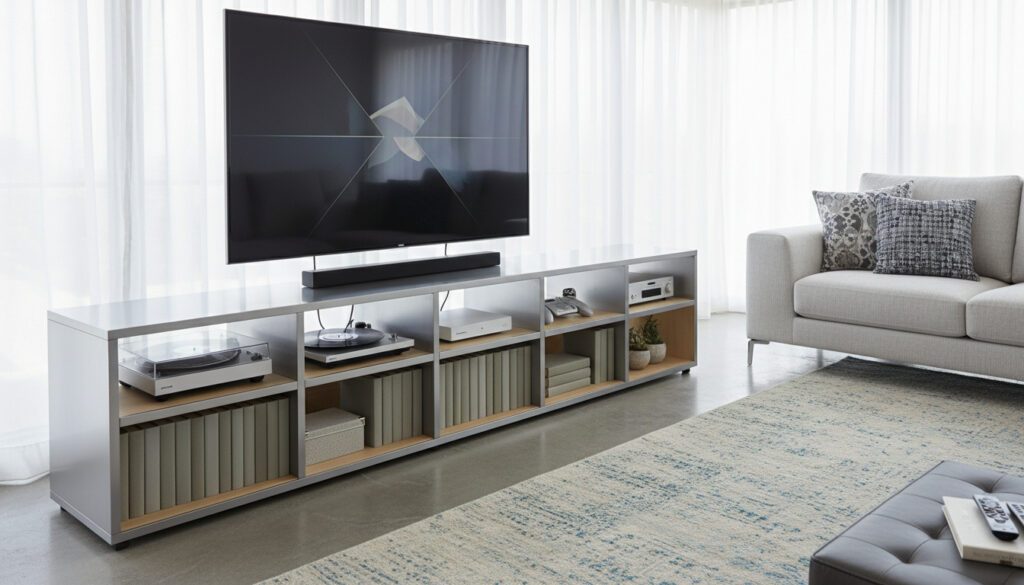
TV Stand With Storage – Top Picks and Size Guide
Modern living rooms demand more than just a surface for your screen. A quality TV stand with storage anchors your entertainment setup while concealing cables, remotes, and gaming equipment in dedicated compartments. The best units balance accessibility with aesthetics, offering hidden drawers alongside open shelving for soundbars and display items.
Manufacturers now emphasize fully assembled delivery and sustainable materials, responding to buyer fatigue over complex DIY construction. Whether you need a floating wall-mounted unit for a compact space or a substantial console for an 86-inch display, understanding the relationship between TV dimensions, storage capacity, and material durability ensures a purchase that lasts beyond seasonal trends.
What Is the Best TV Stand with Storage?
Selection criteria for 2026 prioritize units that arrive ready-to-use, feature certified low-emission materials, and accommodate screens from 55 to 86 inches. The following four models represent distinct categories based on budget and installation requirements.
| Category | Model | Price Range | Storage Configuration |
|---|---|---|---|
| Best Overall | Povison Merrin 63″ Floating | ~$699 | Three deep drawers, E0 MDF core, fully assembled |
| Best Budget | Walker Edison Barn Door 58″ | ~$130–$190 | Sliding barn doors with open shelves and cabinets |
| Best Premium | Crate & Barrel Keane 72″ | $1,999 | Multiple cabinets with brass pulls, FSC-certified mahogany |
| Best Value Wide | IKEA Brimnes 71″ | Affordable | Three spacious drawers for large TVs |
Key insights from current market analysis reveal critical decision factors:
- Fully assembled designs dominate 2026 recommendations, eliminating the frustration of cam-lock construction and missing hardware
- Storage configurations typically combine concealed drawers with open shelving to ensure AV components receive adequate ventilation
- Console width should exceed the TV screen by three to six inches on each side to prevent tipping and maintain visual proportion
- E0-grade MDF and FSC-certified hardwoods represent the leading material standards for durability and low chemical emissions
- Weight capacities of 100 pounds or more accommodate most 55–86 inch displays plus associated equipment
- Integrated cable management systems have transitioned from premium perks to standard features across mid-range and higher tiers
- Price points reflect a broad spectrum, with functional budget options starting near $130 and artisanal furniture exceeding $1,900
| Feature | Ideal Specification | Practical Impact |
|---|---|---|
| Console Width | TV width plus 6–12 inches total | Prevents dangerous overhang and improves stability |
| Height Range | 24–32 inches from floor to surface | Maintains ergonomic eye-level viewing |
| Weight Capacity | Minimum 100 pounds | Safely supports television and AV components |
| Drawer Configuration | Three to four deep compartments | Accommodates controllers, remotes, and physical media |
| Material Certification | E0 MDF or FSC-certified wood | Ensures low emissions and sustainable sourcing |
| Assembly Type | Fully assembled versus flat-pack | Determines setup time and tool requirements |
| Storage Balance | Hidden compartments plus open shelving | Balances concealment with component accessibility |
Sources indicate that leading models from Povison and Walker Edison currently receive the strongest aggregate reviews for storage functionality combined with build quality.
How Do I Choose the Right Size TV Stand with Storage?
Dimensional compatibility extends beyond simple width matching. A 65-inch television requires specific support parameters that vary based on stand type and room layout.
Can a TV Stand with Storage Hold a 65 Inch TV?
Yes, provided the console meets minimum width and weight specifications. For 65-inch screens, select a stand measuring 60 to 80 inches wide with a verified weight capacity exceeding 110 pounds. The Walker Edison Wren Classic exemplifies this category, supporting 65-inch displays up to 110 pounds while incorporating built-in fireplace functionality and hidden cord management.
What Is the Ideal Height for a TV Stand?
The optimal viewing height positions the center of your screen at seated eye level, typically 24 to 32 inches from floor to stand surface. Low-profile consoles suit modern, reclined seating arrangements, while taller traditional stands align with upright furniture. Premium options like the Crate & Barrel Keane sit higher than minimalist floating units, potentially requiring wall-mounting for the television to maintain comfortable sightlines.
Measure your television width without the bezel, then add six inches total for minimum stand length. For large rooms accommodating 75–86 inch screens, extend this to 70–95 inches of console width to maintain proportional balance and prevent tip-over hazards.
| TV Size | Recommended Console Width | Example Models |
|---|---|---|
| 55–65 inches | 50–70 inches | Povison Merrin 63″, Walker Edison 58″ |
| 65–75 inches | 60–80 inches | IKEA Brimnes 71″, Povison Lowline 71″+ |
| 75–86 inches | 70–95 inches | Crate & Barrel Keane 72″, 70″ Modern Stands |
The IKEA Brimnes 71-inch unit remains a popular choice for 65–75 inch televisions, offering substantial drawer space at a value price point, though it requires flat-pack assembly.
What Are the Different Types of TV Stands with Storage?
Contemporary storage solutions fall into distinct installation categories, each affecting room flow and accessibility.
Installation Configurations
Freestanding consoles represent the most common category, offering stability and substantial storage through lowline silhouettes designed for eye-level viewing. Floating or wall-mounted units like the Povison Merrin save floor space and create minimalist aesthetics, though they require proper stud anchoring and limit total weight capacity. Mobile carts provide flexibility for multi-room use, while fireplace-integrated stands such as the Walker Edison Wren combine heating elements with media storage, warming areas up to 400 square feet.
Material Standards and Sustainability
Construction materials directly impact longevity and indoor air quality. E0-grade MDF with walnut veneer offers low-emission affordability, while FSC-certified mahogany commands premium pricing for sustainable luxury. Budget options typically utilize laminate over MDF, sacrificing some durability for cost savings. Emerging eco-conscious manufacturers now incorporate bamboo, recycled aluminum, and mycelium-based composites for environmentally responsible alternatives.
Floating TV stands with storage require mounting into wall studs or concrete anchors; drywall alone cannot support the combined weight of a television and loaded drawers. Always verify your wall structure before installing wall-mounted units exceeding 50 pounds.
What Styles of TV Stands with Storage Are Popular?
Aesthetic selection should complement existing furniture while accommodating functional storage needs distinct to each design language.
Modern minimalist styles feature clean lines, floating silhouettes, and walnut or white finishes that emphasize negative space. Farmhouse designs incorporate sliding barn doors and reclaimed barnwood textures, concealing clutter behind rustic panels. Rustic variations utilize weathered wood finishes with natural grain patterns, while contemporary units employ sleek tapered legs and glass doors for lighter visual weight. The Mid-century modern resurgence at retailers like Sundays and Castlery emphasizes tapered legs paired with hidden storage compartments.
Solid oak and FSC-certified hardwoods withstand refinishing and resist wear over decades, while laminate surfaces require immediate cleanup of spills to prevent edge swelling. E0 MDF cores offer stability in humid climates where solid wood might warp.
Color coordination has shifted away from exact matching toward complementary contrast. A walnut storage stand can anchor a room with light upholstery, while white consoles brighten spaces with darker walls. Brass hardware on premium units like the Crate & Barrel Keane adds accent warmth without dominating the visual field.
How Has TV Stand Storage Design Evolved?
The development of television furniture reflects changing technology and living space constraints across recent decades.
- 1990s: Bulky entertainment centers dominated, featuring massive cabinet structures designed to house CRT televisions and extensive physical media collections.
- 2000s: Flat-screen adoption prompted lower profiles and reduced depths, though storage remained focused on DVD and component housing.
- 2010s: Wall-mounting technology enabled floating designs and minimalist consoles, shifting storage toward concealed cable management and slimline drawers.
- Early 2020s: Modular systems gained traction, allowing buyers to configure drawer and shelf arrangements to specific component needs.
- 2025–2026: Smart-integrated storage emerges, incorporating wireless charging pads into surfaces and utilizing eco-materials like mycelium and bamboo composites for sustainable construction.
Contemporary trends documented in recent market analyses indicate continued demand for fully assembled delivery and configurable storage systems that adapt to streaming devices and gaming consoles rather than disc collections.
What Is Proven and What Remains Uncertain?
Consumer research establishes clear benefits while leaving room for individual variation in specific performance metrics.
| Established Facts | Persistent Uncertainties |
|---|---|
| Integrated storage significantly reduces visible clutter and improves cable management | Exact durability comparison between budget MDF and premium solid wood over ten-year periods remains unverified by longitudinal studies |
| Console width must exceed television width by minimum margins to ensure stability | Universal “ideal” height varies considerably based on individual viewer height and seating furniture depth |
| Weight ratings must account for both television mass and stored components | Color matching requirements depend heavily on specific room lighting conditions and adjacent furniture finishes |
| Fully assembled units reduce setup errors and structural failures | Long-term emission levels from various MDF grades in sealed rooms require further testing |
Do TV Stands with Storage Need to Match Room Decor?
Strict matching has given way to intentional coordination. A TV stand functions as an anchor piece that can either blend with existing wood tones or provide deliberate contrast. In contemporary interiors, mixed materials—such as a walnut stand against white built-ins—create visual interest while maintaining cohesion through repeated accent colors like brass or black metal.
Proportion matters more than exact species matching. A massive rustic console overwhelms small spaces regardless of wood finish, while floating units suit compact rooms regardless of color. For those seeking guidance on media setup aesthetics beyond furniture selection, resources like the Sky TV Phone Number Guide offer additional context on entertainment system configuration.
What Do Expert Reviews Reveal About Storage TV Stands?
Aggregated user feedback and professional assessments highlight consistent satisfaction patterns across price tiers.
“Excellent quality, smooth drawers, perfect ventilation. The unit holds my PlayStation and receiver without overheating issues.”
— User review, Povison Merrin 63″ Floating Stand
“Durable construction with cord-hidden design. Adjustable shelves accommodate various accessories despite the basic support structure.”
— Product analysis, Walker Edison Farmhouse Series
“High storage capacity with modern feel. The generous cabinet space organizes everything, though the higher profile raises the viewing angle.”
— Professional assessment, Crate & Barrel Keane Console
While Wirecutter and Consumer Reports have not published specific 2026 standalone evaluations, cross-referencing video reviews and manufacturer specifications indicates consistent praise for storage balance, cable management integration, and drawer glide quality in units priced above $400.
Where to Buy Affordable TV Stands with Storage?
Quality storage solutions span accessible to luxury price points. Budget-conscious buyers find functional MDF and laminate options between $130 and $190 through major retailers, while mid-range fully assembled units from brands like Povison typically run $669 to $699. Premium FSC-certified hardwood consoles reach $1,999. For modular oak systems and eco-friendly alternatives, specialized retailers offer configurable units with hidden storage compartments. Those interested in entertainment history might appreciate exploring TV Shows With Ruby Wax while considering how media consumption has shaped furniture design.
Frequently Asked Questions
How to assemble a TV stand with storage?
Fully assembled models require only wall-mounting or leg attachment, while flat-pack units need Allen keys and sometimes wood glue for cam-lock joints. Always verify all hardware is present before beginning, and use a level for floating installations to ensure drawer mechanisms operate smoothly.
How much does a good TV stand with storage cost?
Quality entry-level stands start around $130, mid-range options with full assembly and certification run $600–$700, and premium hardwood models exceed $1,500. Expect to pay $400–$500 for modular eco-friendly designs with advanced cable management.
Are TV stands with storage worth it?
Storage integration significantly reduces visible clutter and organizes cables, remotes, and gaming equipment. The value increases proportional to room size constraints, with wall-mounted storage units offering particular utility in compact spaces where floor space is limited.
What materials are best for a TV stand with storage?
E0-grade MDF offers low emissions and affordability for painted or veneered finishes, while FSC-certified solid hardwood provides longevity and refinishability. Avoid particleboard in humid environments, and prioritize CARB P2 certification for indoor air quality.
Can I use a TV stand with storage for gaming consoles?
Yes, provided the stand offers adequate ventilation through open shelving or perforated back panels. Enclosed cabinets require spacing for heat dissipation; look for models specifically noting gaming system compatibility with ventilation channels behind closed doors.
More related posts
 Cast of Harry Potter and the Philosopher’s Stone: Full List
 The Secret Life of Pets: Streaming, Age Rating & Sequel
 Oak Furnitureland Near Me: Stores, Delivery & Oak Worth It
 How to Hard Boil Eggs: The Perfect Method (Time Chart & Tips)
 Left Side Abdominal Pain – Causes, When Serious, Relief Tips
 Napoli vs Inter Milan Lineups: Predicted XI and Team News
 Pound to Rupee Pakistan – Live Rates and Conversion Guide