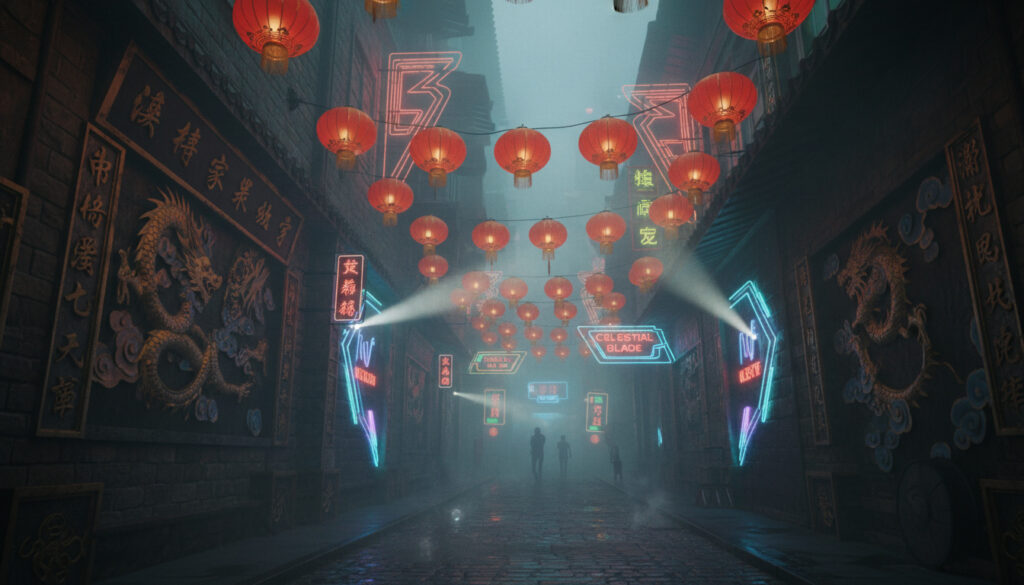
Big Trouble in Little China – Cult Film Legacy
Released in 1986, “Big Trouble in Little China” merges the frenetic energy of action films with broad comedy, supernatural intrigue, and a distinctly 1980s studio gloss. At the hands of director John Carpenter, the film defied expectations both in content and later, in its cultural imprint.
Initially a box-office underperformer, the film quickly found a second life among genre fans. Its singular blend of Chinatown mystique, supernatural villains, and tongue-in-cheek heroics launched “Big Trouble in Little China” into the lexicon of cult classics, influencing filmmakers and filmgoers alike.
With its unique cast, sharp structure, and lasting mythos, the movie continues to be dissected and celebrated by critics, historians, and devoted audiences years after its release.
What is Big Trouble in Little China about?
| Release Date | 1986 | Director | John Carpenter |
|---|---|---|---|
| Genre | Action/Adventure, Comedy | Cult Status | Cult Classic |
- Combines action set pieces with comedy, creating a genre-mixing experience.
- Features John Carpenter’s trademark style, including synth-driven music and subversive character tropes.
- Became influential for its high-concept fantasy and supernatural elements.
- Challenged and inverted the expectations of the traditional Western hero role.
- Blended Hong Kong martial arts cinema with Hollywood adventure.
- Renowned for its memorable dialogue and mythic worldbuilding.
- Found long-term success as a cult film after initial commercial disappointment.
| Fact | Detail |
|---|---|
| Release Year | 1986 |
| Director | John Carpenter |
| Runtime | Approximately 107 minutes |
| Box Office | Mixed initial performance, now a cult favorite |
| Main Cast | Kurt Russell, Dennis Dun, Kim Cattrall, James Hong, Victor Wong |
| Key Villain | Lo Pan (James Hong), ancient sorcerer |
| Setting | San Francisco’s Chinatown |
| Signature Style | Practical effects, wire-fu, comedic subversion of genre |
How was Big Trouble in Little China made?
Direction and Creative Team
John Carpenter helmed the film, working from a screenplay by Gary Goldman and David Z. Weinstein. Inspired by Chinese folklore and Hong Kong cinema, Carpenter collaborated closely with the writing team, infusing the production with practical effects and genre-blurring energy. The score, crafted by Carpenter himself, drew on synth-heavy motifs, reinforcing the film’s offbeat mood. [source]
Production Timeline and Challenges
Filming began in San Francisco’s Chinatown and on soundstages in 1985. Carpenter faced a tight budget and time constraints but leveraged creative improvisation, especially during chaotic fight scenes. The production was notable for its integration of wire-fu choreography and practical miniature effects, blending studio and location shots to create a supernatural San Francisco. [source]
The film’s supernatural elements, including the Three Storms’ elemental powers, were realized mainly with practical effects and wirework, a technique borrowed from Hong Kong martial arts cinema, rather than relying on early computer graphics.
Key Cast and Characters
Kurt Russell led as Jack Burton, supported by Dennis Dun’s assured Wang Chi, Kim Cattrall’s quick-thinking Gracie Law, Victor Wong’s Egg Shen, and James Hong’s immortal antagonist Lo Pan. Secondary roles included Carter Wong, Peter Kwong, and James Pax as the formidable Storms.
Unlike many action movies of the era, “Big Trouble in Little China” made its American protagonist a humorous, often inept outsider, with Asian characters like Wang Chi taking the lead in key action sequences.
What is the cultural impact of Big Trouble in Little China?
Genre Influence and Western-Eastern Fusion
Melding Western action with Eastern mythology, the film influenced action comedies such as “Kung Fu Hustle” and inspired later Hollywood attempts at genre blending. Its Chinatown gang conflict, rooted in real Tongs, gave cultural specificity without falling into cartoonish caricature.
Reception and Evolving Reputation
The initial box office response was tepid, but enthusiastic audiences and home video rentals in the late 1980s cultivated its cult status. The film’s witty script, practical monsters, and irreverent tone earned sustained admiration from fans and critics.
The movie often resists lengthy exposition about its supernatural elements, heightening its sense of myth and mystery for viewers and contributing to its enduring allure.
Cult Classic Status
Now regarded as a defining cult classic, the film’s playful dialogue and visual inventiveness have kept it in the public eye. Carpenter’s self-aware direction is often credited with elevating a pulpy fantasy into a uniquely memorable adventure. Its enduring legacy is a frequent topic in retrospectives, film conventions, and genre studies, as explored in Big Trouble in Little China: A Cult Classic Review.
How did the film’s production and legacy unfold over time?
- Early 1985 – Script development and sale to 20th Century Fox after the mixed reception of Carpenter’s previous work.
- 1985 – Principal photography in San Francisco and studio settings; on-set improvisation and chaos shape the movie’s action sequences.
- July 2, 1986 – Official theatrical release, resulting in a disappointing box office performance compared to a substantial production budget.
- Late 1980s–1990s – Surge in popularity on VHS and cable solidifies cult status.
- 2000s–2020s – Expanded appreciation through DVD, Blu-ray, and critical retrospectives; unproduced sequel concepts are publicly discussed.
Which details about Big Trouble in Little China are well documented, and what remains uncertain?
| Well-Established | Unclear or Debated |
|---|---|
| Directed by John Carpenter with screenplay from Gary Goldman and David Z. Weinstein | Specific creative decisions during script rewrites not fully detailed in public sources |
| Filming locations included Chinatown, San Francisco, and studio sets | Exact budget overages and causes for on-set delays |
| Main cast and credited crew thoroughly documented | Cultural impact range: interpretations vary among critics and fans |
| Initial box office performance and subsequent cult following confirmed | The degree to which the film intentionally subverted versus parodied action tropes is sometimes debated |
| Influence on genre films cited by critics and filmmakers | Details of unproduced sequel scripts remain largely undisclosed |
How does Big Trouble in Little China fit within cinema history and John Carpenter’s career?
Critically, the movie’s release marked a shift for John Carpenter, bridging horror and fantasy in a high-concept studio experiment. Although it stood apart from the likes of “Escape from New York” or “The Thing,” its refusal to follow conventional hero arcs left an evolving mark in film studies. The movie’s playful disregard for genre boundaries and its confident handling of mythic and comedic beats continue to distinguish it within Carpenter’s filmography and 1980s cinema at large. For more insights, see Big Trouble in Little China – Movie Storystructure Analysis.
What do critics and creators say about Big Trouble in Little China?
“Relentless action, magicians and monsters. There’s never a dull moment… Carpenter’s film is a wild, fun ride.”
Roger Ebert, Chicago Sun-Times
“A toboggans ride through death-defying challenges… This movie is truly fantastic because it’s unapologetically absurd.”
Reactor retrospective, Reactor Magazine
“Pure 80s cult action-fantasy, only possible in that studio era.”
The Film Realm
What stands out most about Big Trouble in Little China today?
Decades after its debut, “Big Trouble in Little China” remains essential viewing for those interested in cult cinema. Its fusion of absurdist action, vibrant characters, and East-meets-West mythology is celebrated throughout genre analysis, including detailed breakdowns such as Big Trouble in Little China – Movie Storystructure Analysis. For additional internal context, revisit the insights provided in the opening sections.
Common questions about Big Trouble in Little China
What inspired John Carpenter to create Big Trouble in Little China?
Carpenter drew from Chinese mythology, Hong Kong martial arts films, and the desire to subvert American action-hero conventions.
How was the film received upon its initial release?
The 1986 release saw disappointing box office returns, but critical assessment improved as the movie gained cult status on home video.
Are there any notable behind-the-scenes anecdotes?
Many fight scenes were improvised due to time and budget constraints. Carpenter often embraced production chaos, influencing the film’s spontaneous energy.
What makes Big Trouble in Little China a cult classic?
Its blend of genres, quotable script, inversion of hero roles, and practical effects contributed to passionate fan following and its “cult” designation.
How do modern filmmakers view the legacy of the film?
Many credit it as a pioneer of genre mashups and cite its influence on modern action-comedies and fantasy films.
Was there a planned sequel to Big Trouble in Little China?
An unproduced sequel was discussed, with John Carpenter and Kurt Russell expressing interest, though details remain scarce.
What key elements define the film’s style?
Signature traits include practical special effects, wire-fu stunts, synth music, and a blend of mythic and comic storytelling.
Who are the Three Storms in the film?
Thunder, Rain, and Lightning are supernatural enforcers serving the main villain, Lo Pan. Their powers and martial abilities drive many major action scenes.
Is Big Trouble in Little China available on Blu-ray?
Multiple Blu-ray releases have appeared since the 2000s, with new editions offering retrospectives and behind-the-scenes features.
How does the film fit into John Carpenter’s overall work?
Alongside his horror and sci-fi projects, the film demonstrates Carpenter’s versatility and willingness to experiment with tone and genre.
More related posts
 Katrina Kaif: Net Worth, Baby Boy, Marriage, and Biography
 Sky TV Phone Number – Trusted Customer Support
 Evri Returns Near Me – Simple, Reliable Parcel Drop-Off
 Last Posting Dates For Christmas 2025 – Shipping Guide
 9/11 Attack: Causes, Events, Survival and Aftermath Explained
 Top Free AI Video Generators: Text & Image to Video