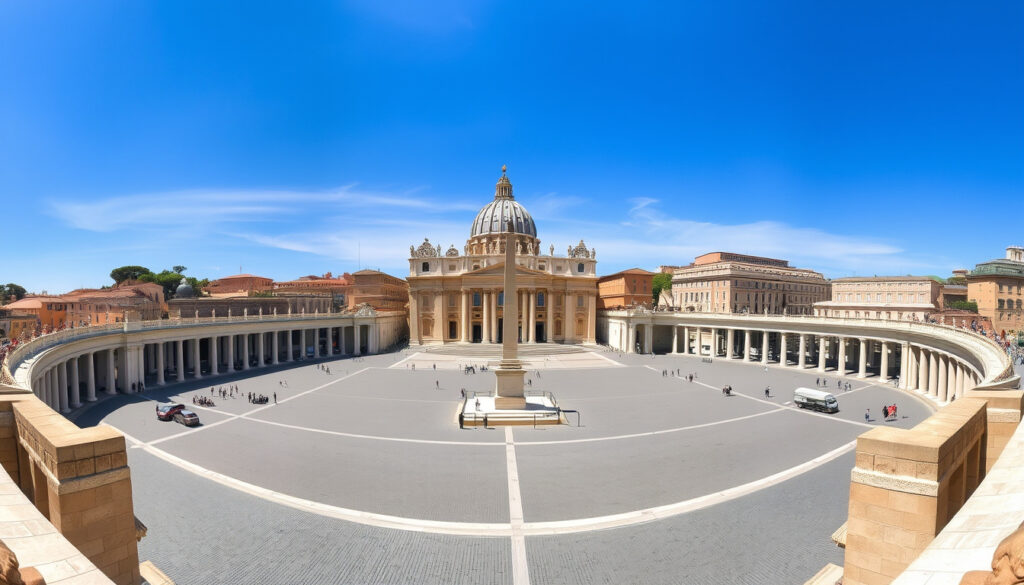
Smallest Country in the World: Vatican City Facts & List
Few titles shift as quickly as “the world’s smallest country” — unless you know where to look. Vatican City holds the record for both area and population, but a handful of other microstates challenge what we think of as a nation.
Smallest country by area: Vatican City (0.44 km²) ·
Smallest country by population: Vatican City (~800 residents) ·
Number of countries under 1 km²: 1 (Vatican City) ·
Smallest country in Africa: Seychelles (455 km²) ·
Smallest country in Europe: Vatican City (0.44 km²)
Quick snapshot
- Vatican City is the smallest sovereign state by area (0.44 km²) and population (~800) (Encyclopaedia Britannica, authoritative reference work)
- The Lateran Treaty of 1929 established Vatican City as an independent state (Encyclopaedia Britannica, historical reference)
- Monaco is the second smallest sovereign state by area at 2.02 km² (CIA World Factbook, official U.S. government database)
- Whether dependent territories like Gibraltar or Hong Kong should be considered in the ranking (Wikipedia, community‑edited encyclopedia)
- Exact population figures vary between sources (Britannica estimates 882, CIA World Factbook estimates 518 as of 2024) (CIA World Factbook, official U.S. government database)
- Whether sub‑national entities with special status (e.g., Åland, Faroe Islands) could be confused with sovereign states (Wikipedia, community‑edited encyclopedia)
- 1929-02-11: Lateran Treaty signed between Holy See and Italy, creating Vatican City State (Encyclopaedia Britannica, historical reference)
- Monaco’s present border and sovereignty settled by treaty with France in 1861 (Wikipedia, community‑edited encyclopedia)
- Rising sea levels threaten the existence of Tuvalu and other low‑lying microstates (CIA World Factbook, environmental context)
- Vatican City’s population may shift as Curia roles change under new papal administrations (Encyclopaedia Britannica, authoritative reference work)
The following table provides a quick reference for the smallest countries.
| Attribute | Value |
|---|---|
| Smallest country in the world | Vatican City (0.44 km²) |
| Second smallest country | Monaco (2.02 km²) |
| Third smallest country | Nauru (21 km²) |
| Smallest country by population | Vatican City (~800 residents) |
| Smallest country in Africa | Seychelles (455 km²) |
| Smallest country in Asia | Maldives (300 km² — CIA World Factbook, official data) |
| Smallest country in Oceania | Nauru (21 km²) |
| Smallest country in North America | Saint Kitts and Nevis (261 km² — Wikipedia, community‑edited encyclopedia) |
| Smallest country in South America | Suriname (163,820 km² — not a microstate, but smallest in region) |
| Number of countries under 500 km² | 17 (including dependencies) |
Which are the 10 smallest countries in the world?
The list of the world’s tiniest sovereign states is dominated by European microstates and small island nations. Here are the top five with exact data, followed by the next five that round out the top ten.
Vatican City: The undisputed smallest
- Area: 0.44 km² (0.17 sq mi) — Encyclopaedia Britannica, authoritative reference work
- Population: ~800 (estimates range from 518 to 882 depending on source and residency definition)
- Status: Independent city-state, enclave within Rome, seat of the Roman Catholic Church
- Founded: 1929 by the Lateran Treaty — Encyclopaedia Britannica, historical reference
Vatican City’s area is roughly the size of 60 football fields. For perspective, you could walk across the entire country in under 20 minutes.
Monaco: The second smallest
- Area: 2.02 km² — CIA World Factbook, official U.S. government database
- Population: ~39,000 (2024 estimate)
- Status: Constitutional monarchy, known for its casino and Mediterranean coastline
- Density: World’s highest population density at over 19,000 people per km²
Nauru: The third smallest
- Area: 21 km² — CIA World Factbook
- Population: ~10,000 (2024 estimate)
- Status: Island nation in Micronesia, smallest republic in the world
- Economy: Heavily dependent on phosphate mining, now declining
Tuvalu: Fourth smallest
- Area: 26 km² — Wikipedia, community‑edited encyclopedia
- Population: ~12,000
- Status: Polynesian island nation, one of the most vulnerable to sea-level rise
San Marino: Fifth smallest
- Area: 61 km² — Wikipedia, community‑edited encyclopedia
- Population: ~34,000
- Status: Oldest surviving sovereign state and constitutional republic (founded in 301 AD)
Rounding out the top ten are Liechtenstein (160 km²), Marshall Islands (181 km²), Saint Kitts and Nevis (261 km²), Maldives (300 km²), and Malta (316 km²). All of these have land areas under 400 km² and are classified as microstates by the United Nations.
What are the 30 smallest countries?
The threshold for the 30 smallest sovereign states lies around 800 km². Here’s a breakdown of the next two groups.
Countries 11-20
- Grenada – 344 km²
- Maldives already listed, but overlaps; this segment starts at 11th place: Saint Vincent and the Grenadines (389 km²), Barbados (430 km²), Seychelles (455 km²), Palau (459 km²), Andorra (468 km²), Antigua and Barbuda (443 km²), Saint Lucia (616 km²), Federated States of Micronesia (702 km²), Singapore (719 km²), Tonga (747 km²)
All of these nations have land areas under 750 km², and many are island states in the Caribbean or Pacific. CIA World Factbook rankings provide the authoritative list.
Countries 21-30
- Dominica (751 km²), Bahrain (765 km²), Kiribati (811 km²), São Tomé and Príncipe (964 km²), Mauritius (2,040 km²), Comoros (2,235 km²), Luxembourg (2,586 km²), Samoa (2,831 km²), Cabo Verde (4,033 km²), Trinidad and Tobago (5,128 km²) — but some sources cut off at 1,000 km² for strict microstate definitions.
The pattern: All countries 21-30 are under 6,000 km², and many are archipelagoes with small landmasses.
When you zoom out to the 30 smallest, you see a cluster of nations that face unique economic and environmental pressures. For example, Kiribati and Tuvalu are actively planning for climate relocation, while Singapore has thrived by leveraging its port position despite tiny land area.
The implication: the smallest countries are overwhelmingly island nations, which shapes their economies and vulnerabilities.
What is the smallest country by population?
By population, the ranking shifts slightly because some microstates have higher densities. Vatican City remains the smallest, but the next few are surprising.
Vatican City has the smallest population
- Population: ~800 (CIA estimate 518, Britannica estimate 882) — CIA World Factbook and Encyclopaedia Britannica
- Citizenship is not by birth but tied to office or service — only about 450 hold Vatican citizenship (Rome Reports, Catholic news outlet)
- Nearly all residents work for the Holy See or related institutions
Other least populous countries
- Nauru – ~10,000 (CIA World Factbook)
- Tuvalu – ~12,000 (Wikipedia, community‑edited encyclopedia)
- Palau – ~18,000
- San Marino – ~34,000
- Liechtenstein – ~39,000
Monaco, despite being the second smallest by area, has a population of ~39,000 — over 40 times that of Vatican City — making it the most densely populated country on Earth.
Population figures for microstates are notoriously inconsistent. The Vatican itself reports different numbers depending on whether you count residents, citizens, or daily workers. For travelers, the population you see on a given day may be far higher due to tourists and pilgrims.
What this means: for travelers, population figures are less relevant than area when visiting microstates.
What is the smallest country in Africa?
Africa’s smallest sovereign state is an island nation in the Indian Ocean.
Seychelles is the smallest African country
- Area: 455 km² — Wikipedia, community‑edited encyclopedia
- Population: ~100,000 (2024 estimate)
- Capital: Victoria
- Composition: 115 islands, mostly granitic and coral
- Economy: Tourism, tuna fishing, and offshore finance
Other small African nations
- São Tomé and Príncipe – 964 km²
- Comoros – 2,235 km²
- Mauritius – 2,040 km²
- Cabo Verde – 4,033 km²
All of these are island or archipelagic nations. The smallest mainland African country is Gambia (11,300 km²), which is still many times larger than Seychelles.
How do the smallest countries compare?
A comparison table shows the stark differences in area and population among the top 15 microstates.
| Rank | Country | Area (km²) | Population | Density (per km²) |
|---|---|---|---|---|
| 1 | Vatican City | 0.44 | ~800 | ~1,800 |
| 2 | Monaco | 2.02 | ~39,000 | ~19,300 |
| 3 | Nauru | 21 | ~10,000 | ~476 |
| 4 | Tuvalu | 26 | ~12,000 | ~462 |
| 5 | San Marino | 61 | ~34,000 | ~557 |
| 6 | Liechtenstein | 160 | ~39,000 | ~244 |
| 7 | Marshall Islands | 181 | ~60,000 | ~332 |
| 8 | Saint Kitts and Nevis | 261 | ~55,000 | ~211 |
| 9 | Maldives | 300 | ~520,000 | ~1,733 |
| 10 | Malta | 316 | ~520,000 | ~1,646 |
One pattern stands out: while Vatican City is the smallest by both area and population, Monaco has the highest density by a wide margin. Conversely, Maldives manages to pack over half a million people into only 300 km², making it one of the most densely populated island states.
Microstates with low area but high population (like Monaco and Malta) rely on dense urban development and service economies. Island microstates like Tuvalu and Nauru have less economic diversification and face existential threats from climate change.
The pattern: the trade‑off between area and population density defines each microstate’s economic path.
Clarity: Confirmed vs. Overblown
Confirmed facts
- Vatican City is the smallest sovereign state by both area (0.44 km²) and population (~800).
- The Lateran Treaty (1929) legitimised Vatican City as an independent state.
- Monaco, Nauru, Tuvalu, and San Marino are the next four smallest by area.
- Seychelles is the smallest country in Africa (455 km²).
What’s unclear
- Whether dependent territories (e.g., Gibraltar, Hong Kong) should be included — they are
More related posts
 Donald Trump Latest News – Critical Political Shifts
 Pigs in a Blanket: Recipes, Origins & Global Names
 When Does The Clocks Go Back – Sleep, Energy And Routine
 Donny van de Beek: The £35m Manchester United Flop
 Klondike Solitaire: Rules, Turn 1 & Free Online Play
 When Is the Next Budget in Ireland? 2026 Date and Details
 Crystal Palace vs Man City – Postponed Due to Fixture Clash
 Eid ul Adha 2026 – UK Date Prayers Qurbani Guide