Left Side Abdominal Pain – Causes, When Serious, Relief Tips
Left side abdominal pain originates from organs situated in the left upper and lower quadrants, including the stomach, spleen, pancreas, left kidney, and descending colon, as well as reproductive structures in the lower region. While many episodes stem from benign issues such as gas or indigestion, persistent or severe discomfort may signal conditions requiring medical intervention.
The anatomical layout divides the left abdomen into upper and lower regions, each housing distinct organs vulnerable to specific pathologies. Upper quadrant pain often involves the pancreas, spleen, stomach, or kidney, whereas lower quadrant sensations typically relate to the sigmoid colon, diverticula, or gynecological structures in women. Understanding these distinctions helps distinguish between self-limiting discomfort and symptoms necessitating urgent evaluation.
What Causes Left Side Abdominal Pain?
Medical authorities identify divergent etiologies depending on whether pain localizes in the upper or lower left abdomen. Cleveland Clinic specialists note that upper quadrant discomfort frequently involves pancreatic inflammation, gastric ulcers, or splenic enlargement, while lower quadrant pain often signifies diverticular disease, irritation of the sigmoid colon, or renal calculi. Gas and indigestion, however, account for the majority of presentations across both regions.
Gas accumulation and indigestion represent approximately eighty percent of transient left-sided abdominal pain cases. These episodes typically resolve within hours to days with rest and dietary modification, requiring no pharmacological intervention.
The following overview maps the four primary anatomical and clinical categories:
| Region | Key Anatomy | Typical Presentations |
|---|---|---|
| Upper Left | Stomach, Spleen, Pancreas, Kidney | Gastritis, Enlargement, Inflammation, Stones |
| Lower Left | Sigmoid Colon, Reproductive Organs, Ureter | Diverticulitis, Cysts, Endometriosis, UTIs |
| Common Benign | Intestinal Tract, Abdominal Wall | Gas, Indigestion, Constipation, Muscle Strain |
| Urgent/Serious | Multiple Systems | Kidney Stones, Ectopic Pregnancy, Torsion |
Key distinctions emerge when evaluating pain characteristics:
- Gas and indigestion constitute the majority of transient left-sided discomfort.
- Diverticulitis predominantly affects the lower left quadrant in adults over fifty.
- Sharp, radiating pain frequently indicates renal calculi or ureteral obstruction.
- Women experience additional diagnostic complexity due to reproductive organ involvement.
- Pain persisting beyond forty-eight hours warrants professional evaluation.
- Postprandial exacerbation often signals gastric or pancreatic inflammation.
- Men may experience referred pain from testicular emergencies presenting in the lower left abdomen.
Sudden, severe pain accompanied by fever, vomiting, hematuria, or bloody stool requires immediate medical assessment to exclude pancreatitis, ectopic pregnancy, or testicular torsion.
| Location | Primary Organs | Common Causes | Serious Causes |
|---|---|---|---|
| Upper Left | Stomach | Gastritis, Ulcers | Stomach Cancer |
| Upper Left | Pancreas | Pancreatitis | Pancreatic Cancer |
| Upper Left | Spleen | Enlarged Spleen | Rupture (trauma) |
| Upper Left | Left Kidney | Infection | Stones, Obstruction |
| Lower Left | Sigmoid Colon | Diverticulitis, IBS, Constipation | Obstruction, Perforation |
| Lower Left | Reproductive (Women) | Ovulation, Cysts | Ectopic Pregnancy, Torsion |
| Lower Left | Reproductive (Men) | — | Inguinal Hernia, Referred Torsion Pain |
| Lower Left | Ureter/Bladder | UTI | Calculi Migration |
Upper quadrant pain implicates digestive and lymphatic organs, while lower quadrant discomfort often involves colorectal or gynecological systems. Clinical observations indicate that pain quality—whether stabbing, cramping, or aching—helps differentiate between gas distension and inflammatory processes.
When Should You Worry About Left Abdominal Pain?
Distinguishing between benign discomfort and pathological pain requires attention to associated symptoms and pain progression. Providence medical guidelines indicate that pain persisting beyond twenty-four to forty-eight hours, particularly when accompanied by systemic symptoms, necessitates professional evaluation.
Critical Warning Signs
Certain symptom combinations indicate medical emergencies. These include severe, unrelenting pain, high fever with chills, persistent vomiting, hematuria or bloody stool, unexplained weight loss, and any abdominal pain during pregnancy. Such presentations may signal ectopic pregnancy, testicular torsion, ruptured ovarian cysts, or severe pancreatitis.
Fever and Systemic Indicators
The presence of elevated body temperature alongside abdominal pain suggests infectious or inflammatory processes such as diverticulitis, kidney infection, or gastroenteritis. Monitoring thermal changes helps contextualize whether concomitant fever warrants urgent care.
Gender-Specific Emergencies
Women experiencing sudden lower left pain with dizziness or vaginal bleeding may have ectopic pregnancy or ovarian torsion. Men with abrupt lower pain and scrotal swelling require immediate evaluation for testicular torsion, a surgical emergency.
Left Lower Abdominal Pain in Women and Men
Gender-specific anatomy introduces distinct differential diagnoses for lower left quadrant pain. Cleveland Clinic specialists document that women face additional gynecological considerations, while men may present with hernia-related or referred pain syndromes.
Gynecological Origins in Women
Female reproductive organs frequently generate referred pain to the lower left abdomen. Conditions include menstrual cramps, ovarian cysts, endometriosis, pelvic inflammatory disease, adenomyosis, and ovarian malignancy. Ectopic pregnancy represents a critical emergency requiring immediate intervention. Symptoms often correlate with menstrual cycles and may include irregular bleeding or dyspareunia.
Male-Specific Presentations
Men experiencing lower left pain should consider inguinal hernias, which manifest as palpable bulges exacerbated by coughing or lifting. Testicular torsion, though scrotal in origin, produces referred abdominal pain accompanied by nausea and swelling—a true surgical emergency mandating immediate urological consultation.
Conditions Affecting Both Genders
Diverticulitis remains the most prevalent cause of lower left pain across sexes, particularly after age fifty. Kidney stones, urinary tract infections, gas accumulation, and constipation similarly affect men and women, though clinical presentation may vary.
How to Relieve Left Side Abdominal Pain at Home
Conservative management suffices for mild, self-limiting discomfort excluding serious pathology. Mayo Clinic guidelines recommend rest, hydration, and thermal therapy for musculoskeletal or gas-related pain.
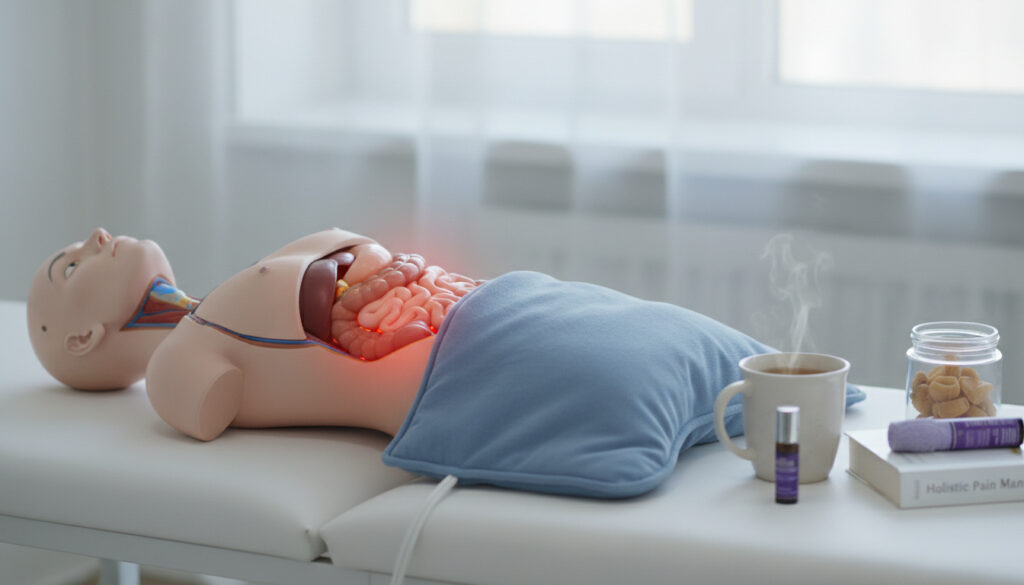
Effective symptomatic relief includes application of a heating pad to the affected area, adherence to a bland BRAT diet (bananas, rice, applesauce, toast), and increased fluid intake. Over-the-counter antacids address indigestion, while simethicone preparations reduce gas bubbles. Short-term laxatives may relieve constipation-induced discomfort, though prolonged use requires medical supervision.
Patients should note that home remedies apply exclusively to mild, transient symptoms. Persistent, worsening, or recurrent pain demands professional assessment rather than continued self-treatment.
Acute Versus Chronic: When Left Side Pain Comes and Goes
Temporal patterns distinguish emergent conditions from chronic functional disorders. Acute onset suggests calculi, torsion, or perforation, whereas intermittent, recurring discomfort often characterizes irritable bowel syndrome, ovulation pain, or chronic constipation.
- Acute Onset: Sudden, severe pain occurring over minutes to hours, typically indicating kidney stones, diverticular perforation, or testicular torsion.
- Subacute Progression: Pain developing over days, common in diverticulitis, kidney infection, or worsening constipation.
- Chronic Intermittent: Recurring episodes over weeks or months, characteristic of IBS, gas, endometriosis, or inflammatory bowel disease.
- Postprandial Temporal: Pain triggered specifically by eating, suggesting gastric ulceration, pancreatitis, or gallbladder involvement.
Tracking symptom progression alongside factors like persistent viral symptoms may help identify post-infectious gastrointestinal disturbances contributing to abdominal discomfort.
Established Facts Versus Diagnostic Uncertainties
Medical consensus exists regarding common etiologies of left-sided pain, yet individual diagnosis requires clinical correlation. The following comparison clarifies what remains established versus what requires professional evaluation:
| Established Clinical Knowledge | Uncertain Without Examination |
|---|---|
| Gas and indigestion represent the most frequent benign causes | Specific diagnosis for acute, severe presentations |
| Diverticulitis predominates in the lower left quadrant of adults over fifty | Differentiating IBS from mechanical obstruction |
| Women experience additional reproductive etiologies including cysts and endometriosis | Self-identifying ruptured ectopic pregnancy |
| Sharp, radiating pain typically indicates calculi or torsion | Distinguishing benign cysts from ovarian malignancy |
| Pain persisting beyond forty-eight hours warrants professional evaluation | Determining exact cause without imaging or laboratory testing |
Anatomical Context: Upper Versus Lower Left Abdomen
Anatomical analysis reveals distinct organ systems in each quadrant. The upper left houses the pancreatic tail, splenic parenchyma, gastric fundus, and left kidney—structures primarily digestive and lymphatic. Conversely, the lower left contains the sigmoid colon, left ureter, and in women, the left ovary and fallopian tube.
This anatomical division explains why upper pain frequently associates with meals and pancreatic function, while lower pain often relates to bowel habits, urinary function, or menstrual cycles. Age represents an additional variable, with diverticular disease and vascular complications increasing incidence in older populations.
Expert Sources and Medical Perspectives
Leading medical institutions provide consistent guidance regarding left-sided abdominal pain evaluation and management.
Left-sided abdominal pain originates from organs including the pancreas, spleen, stomach, left kidney, colon, and in women, reproductive structures. While many causes are benign, certain patterns require immediate evaluation.
— Cleveland Clinic, Left Side Abdominal Pain Overview
Abdominal pain has many potential causes, many of which are not serious. However, contact your doctor if pain persists or you experience severe symptoms such as fever, vomiting, or blood in stool.
— Mayo Clinic, Abdominal Pain Causes
Summary: Navigating Left Side Abdominal Pain
Left side abdominal pain encompasses a spectrum from transient gas distension to life-threatening emergencies. Upper quadrant discomfort implicates the stomach, pancreas, spleen, or kidney, while lower quadrant pain often signals colorectal, urinary, or gynecological pathology. Women face specific considerations including ovarian cysts and ectopic pregnancy; men must consider hernias and testicular torsion. While home remedies suffice for mild indigestion, persistent, severe, or associated symptoms including fever, vomiting, or bleeding mandate immediate medical consultation to exclude serious underlying disease.
Frequently Asked Questions
What organ is on the left side of the abdomen?
The left abdomen contains the stomach, pancreas, spleen, left kidney, descending colon, and sigmoid colon. In women, the left ovary and fallopian tube also reside in the lower left quadrant.
Is left side abdominal pain serious?
Not always. Gas and indigestion cause most cases. However, pain persisting beyond forty-eight hours, or accompanied by fever, vomiting, blood in stool or urine, or severe sudden onset requires immediate medical evaluation.
What does kidney pain on the left side feel like?
Left kidney pain typically presents as sharp, severe discomfort in the upper left flank or lower left back, often radiating toward the groin. Nausea and hematuria frequently accompany renal calculi or infection.
Can gas cause pain on the left side of the stomach?
Gas accumulation commonly causes cramping, bloating, and sharp, stabbing sensations in the left upper or lower abdomen. Symptoms often resolve with movement, pressure, or over-the-counter simethicone preparations.
Why does left side abdominal pain come and go?
Intermittent pain characterizes irritable bowel syndrome, ovulation cycles in women, chronic constipation, or recurring gas. Pattern tracking helps distinguish functional disorders from progressive pathology requiring investigation.
What causes upper left abdominal pain specifically?
Upper left pain frequently stems from gastric inflammation or ulcers, pancreatic disease, splenic enlargement, or kidney infection. Postprandial exacerbation suggests gastric or pancreatic origins.
More related posts
 Best Carpet Cleaner UK 2026: Tried & Tested Buyer Guide
 Denis Sulta: Real Name, Wife, Age, Music & Biography
 Live and Let Die – James Bond Film, Song, Phrase Explained
 Katrina Kaif: Net Worth, Baby Boy, Marriage, and Biography
 A a Re ult Synonym: 46+ Alternative and When to U e Them
 Pearl (2022 Film) – Psychological Horror Analysis
 36 Inches in CM: Exact Conversion (91.44 cm) Guide
 Nestle Frosted Shreddies Cereal Recall – Affected Batches and Refund Guide