Normal Temperature for Adults – True Range and Fever Signs
Body temperature serves as a fundamental vital sign, yet the definition of “normal” remains more nuanced than the fixed 98.6°F figure many learned in school. Modern medical understanding recognizes a broader spectrum of healthy temperatures that shift throughout the day and vary significantly between individuals based on age, measurement method, and physiological factors.
Contemporary research indicates that the average adult body temperature typically falls between 97°F and 99°F (36.1°C to 37.2°C), though individual baselines may differ. Studies from Stanford Medicine suggest the actual average hovers closer to 97.5–97.9°F (36.4–36.6°C), challenging the long-held assumption that 98.6°F represents a universal standard.
Understanding these ranges matters for accurate health monitoring. Whether tracking recovery from illness or monitoring Symptoms of Long COVID – What to Know in 2025, knowing your personal baseline helps distinguish between normal fluctuation and genuine fever.
What Is the Normal Body Temperature Range for Adults?
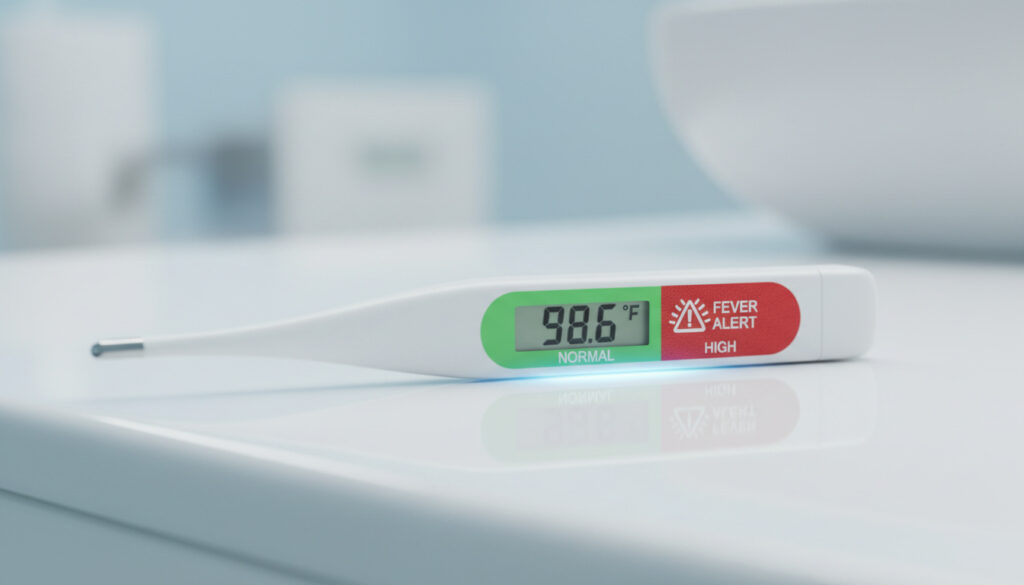
Medical authorities now acknowledge that healthy body temperature exists along a continuum rather than at a single fixed point. While the classic 98.6°F (37°C) remains culturally prominent, evidence supports a wider normal range.
97–99°F (36.1–37.2°C)
~97.9°F (36.6°C)
100.4°F+ (38°C+)
±0.5–0.9°F
Key Insights on Adult Thermal Norms
- The 98.6°F standard originated from 19th-century research using less precise measurement techniques.
- Individual baseline temperatures can vary by up to 1°F from the population average while remaining healthy.
- Adults over 60 typically maintain lower average temperatures than younger adults.
- Measurement site significantly affects readings, with rectal temperatures running approximately 1°F higher than oral.
- Circadian rhythms create predictable daily fluctuations, with lowest temperatures occurring approximately two hours before waking.
- Modern digital thermometers provide more precise readings than the mercury instruments used in historical studies.
Normal Ranges by Measurement Method
| Method | Normal Range (°F) | Normal Range (°C) | Accuracy Notes |
|---|---|---|---|
| Oral | 97.3–99.1°F | 36.3–37.3°C | Standard reference; affected by eating/drinking |
| Rectal | ~99.5°F | ~37.5°C | Most accurate for core temperature |
| Axillary (Underarm) | ~97.7°F | ~36.5°C | Typically 1°F lower than oral; least accurate |
| Tympanic (Ear) | 95.7–100°F | 35.4–37.8°C | Quick but user-dependent technique |
| Temporal (Forehead) | 97–99°F | 36.1–37.2°C | Slightly lower than oral; convenient but variable |
When Is a Temperature Considered a Fever in Adults?
Fever represents the body’s immune response to infection or illness, but the threshold for concern varies by time of day and individual factors. Mayo Clinic guidelines indicate that fever typically begins above 99–100°F (37.2–37.8°C) when measured orally, though specific thresholds shift throughout the day.
Is 99 Degrees a Fever?
A reading of 99°F often falls within normal variation or qualifies as a low-grade fever, depending on the individual’s baseline and measurement timing. OSF Healthcare notes that temperatures between 99°F and 100.4°F may represent either normal elevation or early fever, particularly when measured in the late afternoon or after physical activity.
Recognizing Low-Grade Fever
Low-grade fever generally describes temperatures between 99°F and 100.4°F (37.2°C to 38°C). These subtle elevations often accompany viral infections, inflammatory conditions, or recovery from procedures. Adults should consider their typical baseline when assessing significance.
Medical attention becomes necessary when temperatures reach 103°F (39.4°C) or higher, or when fever persists longer than three days. Immunocompromised individuals and those with What Does Mounjaro Do – Dual Benefits for Diabetes & Weight management concerns should consult healthcare providers at lower thresholds, as conditions like Type 2 diabetes correlate with lower baseline temperatures.
Time-of-Day Considerations
Fever thresholds adjust based on circadian patterns. Early morning readings above 99.1°F (37.3°C) or late afternoon readings exceeding 99.9°F (37.7°C) suggest fever, reflecting the body’s natural temperature rhythm.
How Does Body Temperature Vary in Adults?
Body temperature operates as a dynamic metric rather than a static number, influenced by biological clocks, environmental conditions, and physiological states. Research documented in physiological studies confirms fluctuations of approximately 0.5–0.9°F (0.3–0.5°C) throughout a 24-hour period.
Circadian Rhythms and Daily Patterns
The human body follows predictable thermal cycles, reaching lowest points approximately two hours before waking and peaking in the late afternoon. This variation explains why the same individual might register 97.5°F upon waking and 98.6°F by evening without indicating illness.
Age-Related Thermal Shifts
Thermal regulation changes across the lifespan. Cleveland Clinic data indicates distinct ranges: adults aged 11–65 typically maintain 97.6–99.6°F (36.4–37.6°C), while adults over 65 often range from 96.4–98.5°F (35.8–36.9°C). These lower baselines in older adults may delay fever recognition.
Physiological and Environmental Factors
Multiple variables influence readings including physical activity, hormonal cycles, ambient weather, and body composition. Stanford research also identifies correlations between lower body temperatures and Type 2 diabetes, suggesting metabolic factors play a role in thermal regulation.
What Are the Best Ways to Measure Adult Body Temperature?
Accuracy depends heavily on measurement site and technique. Each method offers distinct advantages regarding convenience, precision, and suitability for specific populations.
Oral Measurement Standards
Oral thermometry serves as the clinical standard for adults, providing reliable core temperature approximations when performed correctly. Users should wait 15 minutes after eating, drinking, or smoking to ensure accuracy.
Place the thermometer tip under the tongue in the posterior sublingual pocket, keep lips closed, and avoid talking during the 30–60 second reading period. Digital thermometers provide faster, more consistent results than glass mercury devices.
Rectal and Axillary Comparisons
Rectal measurement provides the most accurate core temperature readings, particularly crucial for infants but sometimes necessary for adults when precise monitoring matters. Readings typically run 0.5–1.0°F higher than oral. Axillary measurement, while convenient, offers the least accuracy due to skin surface exposure and environmental influences.
Temporal and Tympanic Technologies
Infrared forehead scanners and ear thermometers offer speed and hygiene advantages. WebMD guidance indicates tympanic readings closely approximate rectal temperatures when positioned correctly in the ear canal, while temporal scanners provide convenient screening though with greater variability.
When comparing readings across different methods, adjust expectations: rectal runs approximately 1°F higher than oral, while axillary runs 1°F lower. Consistency in method matters more than absolute numbers for tracking health trends.
How Did 98.6°F Become the Standard?
The history of body temperature norms reveals how medical standards evolve with technological advancement and population changes.
-
German physician Carl Reinhold August Wunderlich publishes findings from 25,000 German patients, establishing 98.6°F (37°C) as the average, though he actually reported a range of 97.9–99.5°F.
-
The 98.6°F figure gains widespread adoption in medical textbooks and popular culture, simplified from Wunderlich’s original range.
-
Digital thermometers replace mercury instruments, revealing more precise individual variations and slightly lower population averages.
-
Stanford University research confirms modern adults average approximately 97.9°F, attributing the decline to improved living standards, lower metabolic rates, and reduced inflammation compared to 19th-century populations.
What Do We Know for Certain About Body Temperature?
- Normal range spans 97–99°F for most adults
- Daily variation of 0.5–0.9°F is physiological
- Measurement site affects readings by up to 1°F
- Older adults maintain lower baselines
- Fever begins above 100.4°F (38°C) clinically
- Exact mechanisms behind declining population averages
- Individual optimal temperature baselines
- Long-term health implications of personal thermal variation
- Gender-specific normative ranges
Why Does Body Temperature Matter for Health Monitoring?
Body temperature functions as an accessible window into metabolic and immune system activity. Deviations from personal baselines often provide the earliest indication of infection, inflammatory response, or metabolic dysfunction. For adults managing chronic conditions or recovering from illness, consistent temperature tracking offers objective data for health decisions.
Understanding normal variation prevents unnecessary anxiety while ensuring genuine fevers receive appropriate attention. In an era of personalized medicine, recognizing that 98.6°F represents a statistical average rather than a universal ideal empowers individuals to establish their own healthy baselines.
What Do Medical Experts Say About Temperature Norms?
“The concept of a single normal temperature has given way to understanding individual variation. Modern adults run cooler than their 19th-century counterparts, and what’s normal for one person may differ significantly from another.”
Stanford Medicine Research Team, 2023
“We see significant variation by age and time of day. Rather than focusing on a specific number, we encourage patients to know their baseline and watch for sustained elevations above that personal norm.”
Cleveland Clinic Health Essentials
When Should Adults Monitor Their Temperature Closely?
Regular temperature monitoring proves valuable during acute illness, when taking medications that affect thermal regulation, or when managing conditions that impair immune response. Adults should establish their baseline during health to better recognize deviations during illness. While 98.6°F remains culturally embedded, the modern medical consensus recognizes 97–99°F as the healthy adult range, with individual variation being the true norm.
Frequently Asked Questions
Does exercise raise body temperature?
Physical activity temporarily elevates body temperature due to increased metabolic heat production. Readings may remain elevated for 20–30 minutes post-exercise, so wait before measuring.
Are there temperature differences between men and women?
Research indicates slight variations related to hormonal cycles, with women typically showing higher temperatures during the luteal phase of menstruation. However, individual variation exceeds gender-based differences.
Can stress affect body temperature?
Psychological stress can trigger minor elevations through sympathetic nervous system activation and cortisol release, though these typically remain within normal ranges unless accompanied by illness.
Is a lower body temperature in older adults normal?
Adults over 65 often maintain baselines between 96.4–98.5°F. This reflects reduced metabolic rate and does not necessarily indicate hypothermia or illness unless accompanied by symptoms.
How long should you wait after eating to take an oral temperature?
Wait at least 15 minutes after eating, drinking, or smoking to ensure oral measurements reflect true core temperature rather than temporary thermal changes from food or beverages.
More related posts
 Pound to Rupee Pakistan – Live Rates and Conversion Guide
 Stephen Fry Net Worth – Detailed Wealth Journey
 Nestle Frosted Shreddies Cereal Recall – Affected Batches and Refund Guide
 The Secret Life of Pets: Streaming, Age Rating & Sequel
 Redmi 4A to Buy in 2025: Worth, Price & Specs Guide
 His and Hers Netflix – Cast, Plot, Episodes and Reviews
 Part Time Jobs Coventry: 8000+ Flexible Student Openings
 Masha and the Bear: Safe for Kids? Overstimulation Risks Explained