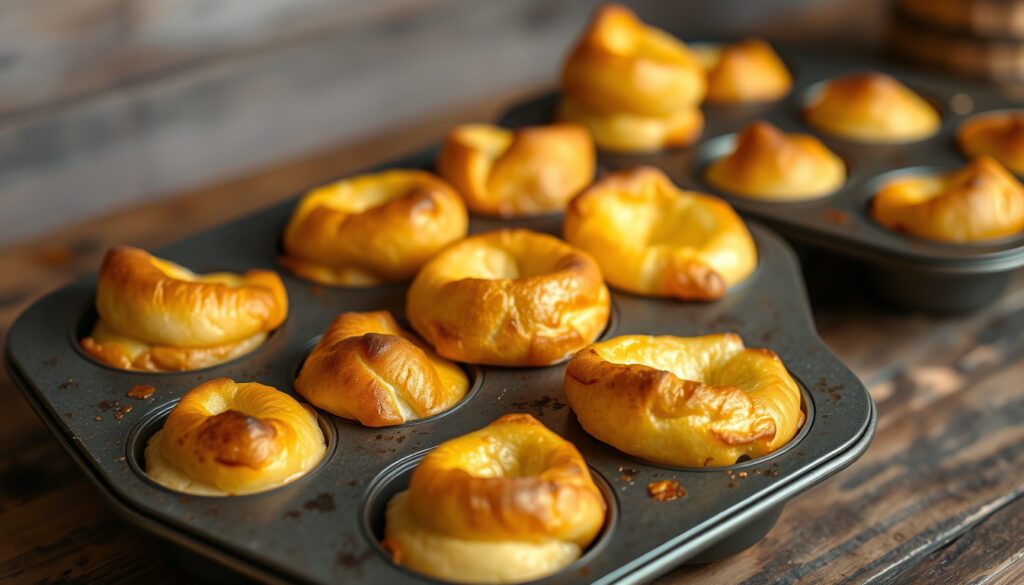
Mary Berry Yorkshire Puddings Recipe: Perfect Rise Every Time
Ask any home cook what separates a Sunday roast from a proper Sunday roast, and the answer comes back fast: the Yorkshire puddings. Mary Berry’s version is famous for pulling off that trick — golden outsides, steam-tunneled middles, the kind of rise that makes you want to eat the whole batch before the meat even arrives. Her method leans on a few key moves that most beginners miss.
Plain flour: 100g · Large eggs: 3 · Milk: 225ml semi-skimmed · Sunflower oil: 4 tbsp · Salt: ¼ tsp
Quick snapshot
- 100g plain flour, 3 eggs, 225ml milk, ¼ tsp salt (Mary Berry Recipe)
- Hot tin + smoking oil = dramatic rise (Mary Berry Cooks)
- Bake at 220°C/200°C fan/Gas 7 for 20-25 minutes (The Happy Foodie)
- Which recipe version Mary Berry published first in print
- Whether scaling always preserves rise quality without testing
- Exact source of most-shared YouTube demonstration
- Hot-tin method standardised over decades of British home cooking
- Video demonstrations uploaded recently to YouTube
- Online scaled recipes proliferated post-2020
- Scale for 2, 4, or 6 servings using precise ratios
- Master the hot-tin start for maximum puff
- Store and reheat without losing texture
| Parameter | Value | Notes |
|---|---|---|
| Standard yield | 12 puddings | From 12-hole deep bun tin |
| Flour amount | 100g plain | All-purpose works fine |
| Eggs | 3 large free-range | Room temperature |
| Milk type | 225ml semi-skimmed | Whole milk also suitable |
| Oil | 4 tbsp sunflower | Beef dripping preferred for authenticity |
| Prep time | 10 minutes | Plus 20-30 min batter rest |
| Oven temperature | 220°C/200°C fan/Gas 7 | High heat essential for rise |
| Bake time | 20-25 minutes | Do not open oven door |
Yorkshire pudding recipe for 4 Mary Berry
The core of Mary Berry’s Yorkshire pudding is a simple batter — flour, eggs, milk, salt — baked in fat hot enough to sear the base the moment batter hits it. The ratio of 100g plain flour to 3 large eggs and 225ml milk appears most consistently across recipe databases, producing a batter that rises tall and even (Mary Berry Recipe). Some online versions scale this down for smaller gatherings, but the three-egg base is what gives the puddings their characteristic lift.
Ingredients
Gather 100g plain flour, ¼ tsp salt, 3 large eggs, and 225ml semi-skimmed milk. A small number of sources list a two-egg variant with 150ml milk for four people specifically, but the extra egg in the standard recipe adds structural protein that holds the rise longer (Mary Berry Cooks). If you want to follow what most closely matches the widely circulated version, stick with the three-egg ratio.
Step-by-step method
First, make a well in the flour and salt. Crack in the eggs and add a splash of milk, then whisk from the centre outward until smooth. This technique prevents lumps and incorporates air that helps the batter rise (The Happy Foodie). Gradually add the remaining milk, whisking continuously.
Let the batter rest for 20-30 minutes at room temperature. This relaxation period allows gluten to develop without tightening, producing a lighter final texture (Mary Berry Cooks). The batter can sit for up to 12 hours if refrigerated, making this a genuinely make-ahead side.
When you’re ready to bake, heat the oven to 220°C/200°C fan/Gas 7. Pour 1 teaspoon of sunflower oil into each hole of a 12-hole bun tin — or 1 tablespoon per hole in a 4-hole Yorkshire tin — and place it in the oven for 5 minutes until the fat is sizzling and nearly smoking (YouTube). The video demonstrates this clearly: the batter goes into the tin the moment it comes out of the oven.
Fill each cavity about halfway — resist the urge to add more. Overfilling causes puddings to merge and steam rather than rise (Mary Berry Cooks). Bake for 20-25 minutes without opening the oven door. Early door-opening drops temperature and causes the puddings to collapse.
They should emerge deep golden and dramatically risen. If the tops are pale, give them 2-3 more minutes with the door still closed. Cool on a wire rack if serving shortly, or freeze flat on a tray before bagging for later use (The Happy Foodie).
Baking tips
- Use room-temperature eggs — cold eggs make batter thicken unevenly
- Whisk actively while adding milk to keep air bubbles in suspension
- Check tin size: 12-hole deep bun tin, two 4-hole tins, or a 23x33cm roasting tin all work (The Happy Foodie)
- Roasting tin puddings may need up to 35 minutes total
- Avoid beef dripping if vegetarian — sunflower oil performs nearly as well
Yorkshire pudding recipe for 2
Cooking for two means scaling down without losing the technique that makes puddings impressive. The standard three-egg batch makes 12 puddings — more than most couples need — so halving the quantities gives you roughly 6 medium puddings, which is a reasonable amount if you’re also having other sides.
Adjusted ingredients
- 50g plain flour
- 1½ large eggs (round up from 1.5 — a single egg plus a touch of a second)
- About 110ml milk
- Pinch of salt
- 2-3 tsp oil for a 6-hole tin or small roasting tin
Scaling instructions
The three-egg-to-225ml ratio (approximately 1 egg per 75ml milk) holds as you scale down, so maintain that relationship rather than treating measurements as fixed amounts. For two people, a 6-hole bun tin works perfectly, but a small oven-safe dish — a pie dish or a loaf tin — also captures the hot-tin technique. Just reduce the oil accordingly: roughly 1 teaspoon per serving area.
Tin size advice
A 6-hole tin gives you larger individual puddings. A 12-hole tin filled with half the batter creates smaller, crisp puddings — both approaches work; it depends on whether you want one impressive pudding per person or several to pick at (Mary Berry Cooks). The roasting tin method (bake as one large pudding or several in a single dish) suits a small loaf tin or a square dish for two.
Smaller batches are harder to judge for doneness — a single tray of six puddings may brown faster or slower than expected. Watch the colour rather than the clock, and rely on the no-door-opening rule above all else.
Yorkshire pudding recipe for 6
Scaling up for six requires running the same ratios but across more tin real estate. The base recipe (100g flour, 3 eggs, 225ml milk) yields 12 puddings — enough for a family gathering if everyone takes two or three. If you need more, scale to 1.5× the standard batch.
Increased quantities
- 150g plain flour
- 4-5 large eggs (round up; 4.5 eggs is awkward to measure)
- 340ml milk
- ⅜ tsp salt (approximately ¼ tsp plus a pinch)
- 6 tbsp oil for a 12-hole tin plus spare holes, or a large roasting tin
Larger tin guidance
A single 12-hole tin isn’t enough for six servings — you’ll need two tins or a large roasting tin. Two 12-hole tins fitting in the oven simultaneously is tight but doable if your oven is conventional rather than fan-assisted (The Happy Foodie). Place tins on different shelves and rotate halfway through if your oven has hot spots.
Cooking adjustments
With more batter and multiple tins, the oven works harder. Expect 20-25 minutes on the top shelf and potentially 25-30 on the bottom if one tin is further from the heat source. The oven should stay at 220°C/200°C fan/Gas 7 throughout — opening the door to check collapses the rise every time. Use a timer rather than curiosity as your guide.
Doubling the batch doesn’t double the drama — it divides attention across more surfaces that all need hot fat simultaneously. If your oven can’t accommodate two tins at once, bake in two rounds rather than cramming.
Mary Berry Yorkshire puddings video
Watching the technique demonstrated helps more than reading instructions. Several video demonstrations show Mary Berry’s method in real time, including the critical moment of pouring batter into a preheated tin (YouTube).
Video demonstrations
The most-shared demonstration runs about four minutes, showing the entire process from batter mixing through rested batter to the puddings emerging from the oven. Key moments to watch: the whisk motion in the flour well, the 5-minute oil heating countdown, and the instant transfer from jug to hot tin.
Key visual steps
- How much batter per hole — fill halfway, no more
- The colour of properly heated oil before batter goes in
- What “do not open the door” looks like across a 20-minute bake
- The final golden height achieved
Common mistakes shown
Most video demonstrations include a warning about opening the oven door early. The puddings visibly deflate in demonstrations where the door opens before 15 minutes have passed. A second common mistake shown: cold fat in the tin, which produces flat, dense puddings with no rise at all.
Video sources vary in which Mary Berry appearance they reference. The widely circulating YouTube demonstration (YouTube) is consistent with the written recipe but predates some online scaled versions by several years.
Old fashioned Yorkshire pudding recipe for 2
The traditional British approach to Yorkshire pudding predates modern recipe standardisation. Old-fashioned versions often used beef dripping rather than vegetable oil, and sometimes called for self-raising flour to aid the rise. Mary Berry’s method sits between tradition and modern practice — it uses plain flour (traditional) but adds milk gradually (a more contemporary technique).
Classic method
Traditional recipes from pre-war British cooking often specify dripping as the fat of choice because it has a higher smoke point and adds a meaty richness that sunflower oil cannot match. The self-raising flour substitution was common in older household recipes, producing a lighter, more forgiving pudding (Mary Berry Cooks). This substitution is marked as medium-confidence in recipe databases — it works, but it’s not the canonical version.
Mary Berry adaptations
Mary Berry uses plain flour and sunflower oil in her widely circulated recipe, which represents a practical adaptation for modern kitchens where dripping is less commonly stocked. She retains the hot-tin technique (the non-negotiable element) and the batter-rest step, which are what most affect the final result. For two people following an old-fashioned spirit, swap oil for dripping and keep everything else the same.
Authentic tips
- Render beef fat from a roast joint and use that drippings in the tin — authentic beyond what any oil achieves
- Self-raising flour produces a slightly puffier result with less structural integrity; plain flour produces taller, more hollow puddings
- Old recipes rarely specify resting the batter — adding a 20-30 minute rest is a modern refinement worth keeping
- Gas mark 7 heat corresponds to a standard UK gas oven — electric and fan ovens need the conversions already provided
How to make Mary Berry Yorkshire puddings
Breaking the method into discrete steps clarifies where precision matters and where you have latitude.
Tips for perfect Mary Berry Yorkshire puddings
A few details separate a good Yorkshire pudding from a memorable one.
- Fat temperature is non-negotiable. Smoking hot fat is what causes the immediate sear that creates the rise. Warm fat produces flat, heavy puddings — there is no workaround for this step (YouTube).
- Ingredients must be room temperature. Cold eggs and milk emulsify poorly and create a uneven batter that rises unevenly.
- Batter consistency matters. It should pour like single cream — thin enough to spread but thick enough to hold structure. Add milk gradually and stop when the right pourable consistency is reached.
- Don’t overcrowd the oven. Hot air needs to circulate. If puddings are touching in the tin or blocking other shelf space, they steam rather than roast.
- Reheat at high heat, never microwave. Leftover puddings reheat at 220°C/200°C fan/Gas 7 for 8 minutes to restore crispness. Microwaving makes them rubbery (Mary Berry Cooks).
Low oven temperature and insufficiently hot fat are the two biggest failures. A family oven that runs cool — a common issue with older models — can undermine the recipe without other signs. If your puddings consistently fail to rise, test the oven with an oven thermometer.
Storing and reheating Mary Berry Yorkshire puddings
Yorkshire puddings store well and reheat better than most people expect.
Freezing
Cool completely on a wire rack, then freeze flat on a baking tray for 30 minutes before transferring to a freezer bag. This prevents them sticking together. They hold well for up to 3 months (The Happy Foodie). Label the bag — they all look identical once frozen.
Reheating
The oven is the only proper reheating method. Place frozen or refrigerated puddings on a baking tray and heat at 220°C/200°C fan/Gas 7 for 8 minutes until piping hot and crisp again. The microwave is not suitable — it turns the exterior rubbery and leaves the interior cold.
Serving cold
Leftover puddings served cold work well as a snack with butter or alongside cold meats. Their hollow structure makes them ideal for holding gravy or dips.
Confirmed facts
- Oven temperature: 220°C/200°C fan/Gas 7 (verified by multiple sources)
- Standard ingredients: 100g flour, 3 eggs, 225ml milk, ¼ tsp salt
- Hot tin essential for rise — oil must be smoking before batter is added
- Baking time: 20-25 minutes without opening oven door
- Resting batter 20-30 minutes improves rise
- Batter can be made 12 hours ahead and refrigerated
- Freezes well for up to 3 months
- Reheat at 220°C/200°C fan/Gas 7 for 8 minutes
What’s unclear
- Precise scaling formula without home testing for smaller batches
- Whether self-raising flour consistently outperforms plain flour across oven types
- Original print publication source and date of Mary Berry’s recipe
Related reading: Marry Me Chicken Recipe
Related coverage: scaled recipes for 2, 4 or 6 fördjupar bilden av Mary Berry Yorkshire Puddings – Scaled Recipes for 2, 4 or 6.
Frequently asked questions
What temperature for Mary Berry Yorkshire puddings?
Bake at 220°C/200°C fan/Gas 7. This high heat is critical — lower temperatures produce flat, dense puddings with no dramatic rise. Fan ovens run cooler than the stated temperature, which is why 200°C fan is the equivalent of 220°C conventional.
How to prevent flat Mary Berry Yorkshire puddings?
Two causes account for most flat puddings: cold fat and a low oven. The fat in the tin must be smoking hot before batter is added. The oven must hold 220°C/200°C fan/Gas 7 throughout baking. Additionally, keep the oven door closed for the full 20-25 minutes — checking early collapses the rise.
Can I use whole milk in Mary Berry recipe?
Yes. Semi-skimmed milk is listed in most versions, but whole milk works equally well. The fat content difference is minor in a batter context. Skimmed milk produces a slightly less rich result, but the recipe still succeeds.
What flour type for Mary Berry Yorkshire puddings?
Plain flour is the standard choice — it gives the strongest structure and tallest rise. Self-raising flour creates a lighter, puffier result but is not the canonical Mary Berry version. A small number of sources suggest self-raising as an alternative, but this is a variation rather than the recipe itself.
How to store leftover Mary Berry Yorkshire puddings?
Cool completely, then freeze flat on a baking tray before bagging. They keep in the freezer for up to 3 months. Refrigerate overnight if eating within 24 hours. Reheat in a hot oven (220°C/200°C fan/Gas 7 for 8 minutes) — never microwave.
Are Mary Berry Yorkshire puddings vegetarian friendly?
The standard recipe uses sunflower oil and is vegetarian. If using beef dripping, it is not vegetarian. Mary Berry’s widely circulated recipe is designed for versatility — swapping the fat is the only change needed for a vegetarian version.
What’s the secret to Mary Berry’s tall Yorkshire puddings?
Three factors: hot fat searing the batter on contact, an extra egg (three eggs rather than the traditional two), and not opening the oven door. The extra egg adds protein structure that holds the rise. The hot fat creates steam inside the batter that lifts it dramatically before it sets.
This step is key for that signature Yorkshire pudding puff.
— Mary Berry demonstration (YouTube)
Heating the tin until the fat is smoking and placing the batter in immediately ensures a strong lift.
— Recipe guidance (Mary Berry Cooks)
Mary Berry’s approach distils decades of British baking into a handful of non-negotiable moves — hot fat, extra egg, no peeking. Follow those three, and the puddings take care of themselves. The scaling math for two or six people follows the same ratios once you know the base, so the technique transfers entirely.
More related posts
 Is All-Purpose Flour the Same as Plain Flour? US vs UK Guide
 British Gas Lite Login: Access Business Energy Account
 Cast of The Boys: Complete Actors List for Seasons 1-5
 sport.ro vs Digi Sport: Guide to Romania’s Sports News
 E-on Next – Sustainable Energy Management For Savings
 Long Dresses For Women – Timeless Style & Smart Advice
 Dark Side of the Ring Season 5: Episodes, Release Date & Watch Online
 BT Free Phone Number 0300 – Reliable Support Info