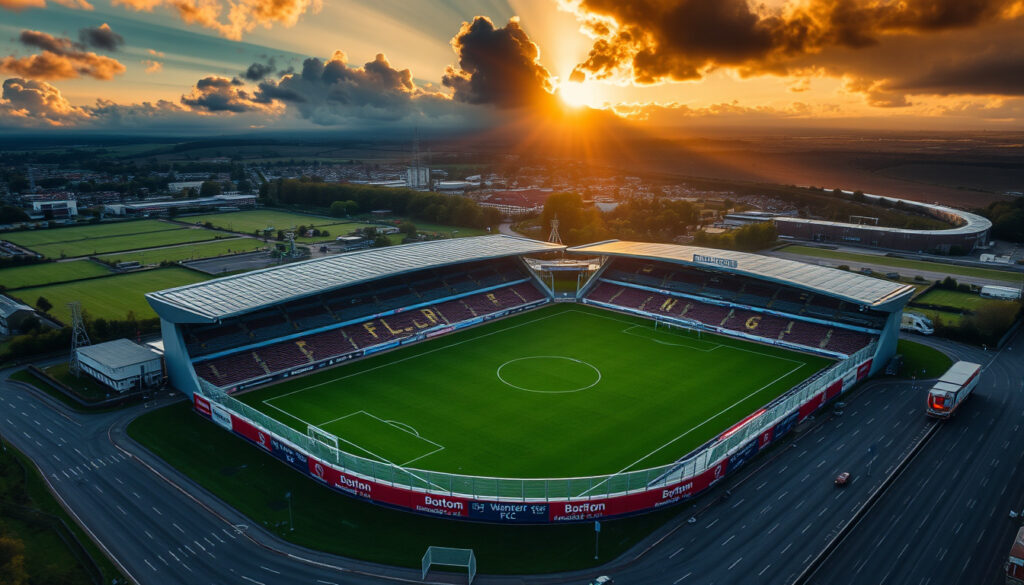
Bolton Wanderers F.C.: Financial History and Recovery
There is something quietly dramatic about a club that once had Manchester United and Arsenal coming to town, now grinding out results in the third tier while rebuilding from the ruins of what was nearly a complete financial collapse. Bolton Wanderers have lived that story in real time — and if you’ve ended up here, you are probably trying to piece together exactly how it happened and where the club stands now. This guide pulls together the verified numbers, the key turning points, and the questions that still deserve answers.
Current League: League One · Location: Horwich, Greater Manchester · Recent Match: Wanderers 3-3 Huddersfield Town · Competes In: EFL League One
Quick snapshot
- League One finish position 2024/25: 8th place (Bolton Wanderers Official Website)
- Group turnover 2024/25: £20.5m (Bolton Wanderers Official Website)
- Net assets grew to £17.66m in 2024/25 from £15.82m in 2023/24 (Bolton Wanderers Official Website)
- Exact sale price for any completed ownership transfer
- Current precise debt levels beyond net liabilities figure of £7.06m
- Whether further shareholder investment will sustain operations long-term
- May 2019: Club entered administration after unpaid tax bill of £1.2 million (YouTube Documentary – What Really Happened To Bolton Wanderers)
- Post-administration: 12-point penalty applied for 2019/20 season (YouTube Documentary)
- 2024/25: £20.15m shareholder investment confirmed (Bolton Wanderers Official Website)
- Operating loss of £13.91m for 2024/25 exceeds 2023/24 figure of £9.78m (Bolton Wanderers Official Website)
- Professional football income grew to £6.86m from £6.62m in prior year (Bolton Wanderers Official Website)
- Recovery path hinges on sustained investment and league position improvements (Bolton Wanderers Official Website)
The table below consolidates the key financial and administrative facts about Bolton Wanderers F.C. as documented in official club accounts and regulatory filings.
| Category | Detail |
|---|---|
| Full Name | Bolton Wanderers F.C. |
| League | EFL League One |
| Location | Horwich, Metropolitan Borough of Bolton |
| Official Site | bwfc.co.uk |
| Wikipedia | Wikipedia – Bolton Wanderers F.C. |
| Operating Loss 2024/25 | £13.91m (Bolton Wanderers Official Website) |
| Net Assets 2024/25 | £17.66m (Bolton Wanderers Official Website) |
| Net Liabilities (Consolidated) | £7.06m (Bolton Wanderers Official Website) |
What happened to Bolton Wanderers?
The story of Bolton Wanderers’ fall from grace reads like a cautionary tale about what can go wrong when a football club’s finances spin out of control. The club had accumulated debt nearing £200 million before entering administration in May 2019, triggered by an unpaid tax bill of just £1.2 million (YouTube Documentary – What Really Happened To Bolton Wanderers). That £1.2 million figure sounds almost modest against the scale of what had built up beneath the surface.
Financial issues
The root causes ran deeper than a single missed payment. Players did not receive wages from owner Ken Anderson for 20 weeks during the crisis period. The training ground had no drinking water nor hot water for showers. The club set up a foodbank for staff to use due to delayed wage payments (Business Rescue Expert). These details reveal a human cost that the balance sheet numbers alone cannot capture.
According to analysis from Business Rescue Expert (specialist insolvency practitioner), the club owed money to kit manufacturers Macron, Bolton Council, and other creditors including Fildraw. Bolton was the first English football league club to enter administration in six years since Aldershot Town in 2013.
Ownership changes
The Sky Sports investigation detailed how Ken Anderson failed to ensure his companies paid VAT and failed to cooperate with liquidators according to Official Insolvency Services. Anderson diverted Professional Football Insolvency (PSI) funds by depositing them into a personal bank account and invoicing in the name of another connected company.
Former Watford FC owner Laurence Bassini pursued a takeover but the deal did not complete (Business Rescue Expert). The club continued operating under administration while potential buyers came and went.
Relegations
The sporting consequences were severe. Bolton lost 30 matches out of 46 and conceded 78 goals while scoring only 29 during their relegation season from the Championship (Business Rescue Expert). A 12-point penalty was applied for the 2019/20 season following administration, compounding the damage. The standard EFL penalty for administration is a 12-point deduction, and Bolton received exactly that.
The unpaid £1.2 million tax bill was the trigger, not the cause. What brought the club to that point was years of accumulated debt, ownership malfeasance, and governance failures that the EFL struggled to prevent.
When were Bolton Wanderers last in the Premier League?
Bolton Wanderers were last competing in the Premier League during the 2011-12 season, when they finished 16th and survived by four points. The club then spent five seasons bouncing between the Championship and League One while financial problems intensified.
Premier League seasons
The club’s Premier League era is worth remembering for its ambition. During the 2000s, Bolton under Sam Allardyce and then Owen Coyle became known for signing established internationals and playing attractive football at a level the club’s current circumstances would make unrecognizable.
Post-relegation path
The drop through the divisions accelerated once financial problems became public. Players went on strike after not being paid wages for March and refused to play a match at home to Brentford. The Brentford match was awarded to the Bees as a 1-0 win after Bolton players refused to play (Business Rescue Expert). The Professional Footballers Association lent Bolton sufficient money to pay players for the Nottingham Forest fixture on the final day.
The trajectory from Premier League to League One took roughly seven years. The club now needs to reverse that path — and the financial accounts suggest the margin for error remains razor-thin.
Are Bolton Wanderers in financial trouble?
The short answer is that Bolton Wanderers are past the acute crisis but remain in a fragile financial position. The club reported an operating loss of £13.91m for 2024/25, compared to £9.78m in 2023/24 — meaning losses actually widened despite the recovery narrative (Bolton Wanderers Official Website).
Recent losses
Group turnover for 2024/25 was £20.5m, down from £21.3m in 2023/24. This represents a contraction in revenue at the same time as operating losses grew. The Professional Footballers Association and HMRC involvement in earlier years showed how quickly unpaid obligations cascade into formal insolvency proceedings.
Debt status
Consolidated group accounts show net liabilities of £7.06m at year-end 2024/25. However, the club’s net assets grew to £17.66m in 2024/25 from £15.82m in 2023/24 — a positive movement that suggests the equity position improved even as operating losses mounted (Bolton Wanderers Official Website).
Shareholders invested £20.15m into the group during 2024/25. This level of ongoing capital injection is what keeps the club operational but raises questions about sustainability if revenue cannot be grown to match costs.
Recovery efforts
The positive signals include professional football income growing to £6.86m in 2024/25 from £6.62m in 2023/24, and academy income rising 4.8% to £611,718 (Bolton Wanderers Official Website). Academy development represents a long-term investment that could eventually reduce reliance on transfer spending.
How much would it cost to buy Bolton Wanderers?
The sale of a football club in administration or near-insolvency involves complex negotiations that rarely produce a single public price. What the accounts show is that any buyer would need to address net liabilities of £7.06m while also funding ongoing operating losses that exceed £13m annually.
Sale agreements
Multiple potential buyers have pursued the club over the years without completing transactions. The Laurence Bassini attempt did not reach completion, and other suitors reportedly came and went during the administration period. For a deeper dive into the financial history and recovery of Bolton Wanderers, you can explore Віктор Венгер Арсенал результати.
Valuation factors
A realistic purchase would likely require covering existing liabilities, providing working capital for operations, and investing in squad development to push for promotion. The £20.15m in shareholder investment during 2024/25 suggests the current ownership structure is actively funding operations rather than seeking an immediate exit.
For a potential investor, the club’s League One status and brand recognition carry value — but so do the structural losses. Any buyer needs deep pockets and patience, not a quick flip.
What is the closest station to Bolton FC?
Bolton Wanderers play at the University of Bolton Stadium, located in Horwich, Greater Manchester. The nearest railway station is Horwich Parkway, which sits approximately 0.5 miles from the stadium and is served by Northern Rail services connecting to Manchester and Bolton town centre.
Travel directions
The stadium address is: University of Bolton Stadium, Arena Approach, Horwich, Bolton BL6 6JW. Fans traveling by car can use the M61 motorway (junction 6) with the stadium visible from the carriageway. The club has published dedicated travel information on bwfc.co.uk (official website) for matchday guidance.
Stadium access
During the administration crisis, the hotel at the University of Bolton stadium was closed and faced a separate winding-up petition by HMRC (Business Rescue Expert). The Safety Action Group withdrew the safety certificate for the stadium at one point, preventing fixtures until reissued — a stark reminder of how off-pitch problems directly affected the matchday experience.
Timeline of key events
The timeline below tracks the major financial and sporting milestones that define Bolton Wanderers’ recent history, sourced from official accounts, insolvency filings, and investigative reports.
| Period | Event |
|---|---|
| Pre-2019 | Debt accumulated to nearly £200 million under Ken Anderson ownership (YouTube Documentary) |
| May 2019 | Club entered administration after unpaid £1.2 million tax bill (YouTube Documentary) |
| 2019/20 season | 12-point penalty applied; players staged strike over unpaid wages (Business Rescue Expert) |
| 2019/20 season | Relegated to League One after finishing 23rd in Championship (YouTube Documentary) |
| 2023/24 | Operating loss of £9.78m; group turnover £21.3m (Bolton Wanderers Official Website) |
| 2024/25 | Finished 8th in League One; operating loss widened to £13.91m (Bolton Wanderers Official Website) |
| 2024/25 | £20.15m shareholder investment confirmed (Bolton Wanderers Official Website) |
The two-column summary below separates what is documented in official sources from what remains uncertain based on current evidence.
What we know for certain
- Club entered administration in May 2019 with £1.2 million unpaid tax bill (YouTube Documentary)
- Finished 8th in League One during 2024/25 season (Bolton Wanderers Official Website)
- Operating loss of £13.91m in 2024/25 (Bolton Wanderers Official Website)
- £20.15m shareholder investment received during 2024/25 (Bolton Wanderers Official Website)
- Net assets grew from £15.82m to £17.66m in 2024/25 (Bolton Wanderers Official Website)
- University of Bolton Stadium has been operational throughout recovery
What remains unclear
- Exact sale price if ownership has changed hands
- Whether additional capital will be required beyond 2024/25
- Status of any ongoing legal proceedings against former owners
- Specific plans for reducing the £7.06m net liabilities figure
The club has continued to trade through a challenging period, with continued shareholder support ensuring the club has adequate funding to meet its obligations as they fall due.
David Ray, CEO, Bolton Wanderers (commenting on 2024/25 accounts via Bolton Wanderers Official Website)
Bolton Wanderers were a Premier League club. The scale of what happened here shows how quickly things can unravel when governance breaks down.
Business Rescue Expert (analysis of administration case via Business Rescue Expert)
Related reading: Premier League 2024/25 Dates and Fixtures · Man City vs Chelsea Highlights and Analysis
Frequently asked questions
Did Bolton ever win the Premier League?
No. Bolton Wanderers never won the Premier League. They were a solid mid-table and upper-mid-table Premier League club during the 2000s, with their best finishes coming in the early 2000s under Sam Allardyce, but they never finished high enough to challenge for the title.
Which ex Bolton player died in a car crash?
Former Bolton Wanderers player Jlloyd Samuel died in a car crash. Samuel played for the club between 2007 and 2011 and was involved in a fatal road traffic collision, which prompted tributes from the football community.
What are Bolton Wanderers’ nicknames?
Bolton Wanderers are nicknamed “The Trotters.” The club was founded in 1874 and has played under various names before settling as Bolton Wanderers F.C. The nickname “Trotters” dates back to the club’s early years.
What is Bolton Wanderers’ current league position?
Bolton Wanderers finished 8th in EFL League One during the 2024/25 season, according to accounts published on Bolton Wanderers Official Website. This represents a mid-table finish in the third tier of English football.
How much debt did Bolton Wanderers accumulate?
The club had accumulated debt nearing £200 million prior to entering administration in May 2019, as documented in investigative reporting. The administration was triggered by an unpaid tax bill of £1.2 million.
Who currently owns Bolton Wanderers?
The club has undergone multiple ownership changes since the 2019 administration. Current accounts show shareholders invested £20.15m during 2024/25, indicating ongoing financial support from the ownership group. Specific ownership details should be confirmed through the club’s official announcements or Companies House records.
The Bolton Wanderers story is not yet finished. The club survived administration, avoided liquidation, and is now operating in League One with a clearer financial picture than the crisis years — but operating losses of nearly £14m demand attention. For fans and observers, the question is whether the club can build on its 8th-place finish and grow revenue, or whether another injection of shareholder capital will be needed simply to stay the course. The trajectory exists, but the margin for misstep remains uncomfortably thin.
More related posts
 Electric Shuffle Canary Wharf – Hours, Prices, Booking Guide
 Miss Rachel Net Worth 2025: $6.5M-$50M Estimates & Salary
 How to Cook a Turkey: The Complete Guide to a Perfect Roast
 How Many Calories Should I Eat? A Guide by Age & Weight Loss
 Everton vs Liverpool: Merseyside Derby Rivalry, Finances & History
 sport.ro vs Digi Sport: Guide to Romania’s Sports News
 The Last Letter from Your Lover – Plot, Cast and Ending Guide
 Chard & Ilminster News: Latest Updates, Crime, Deaths