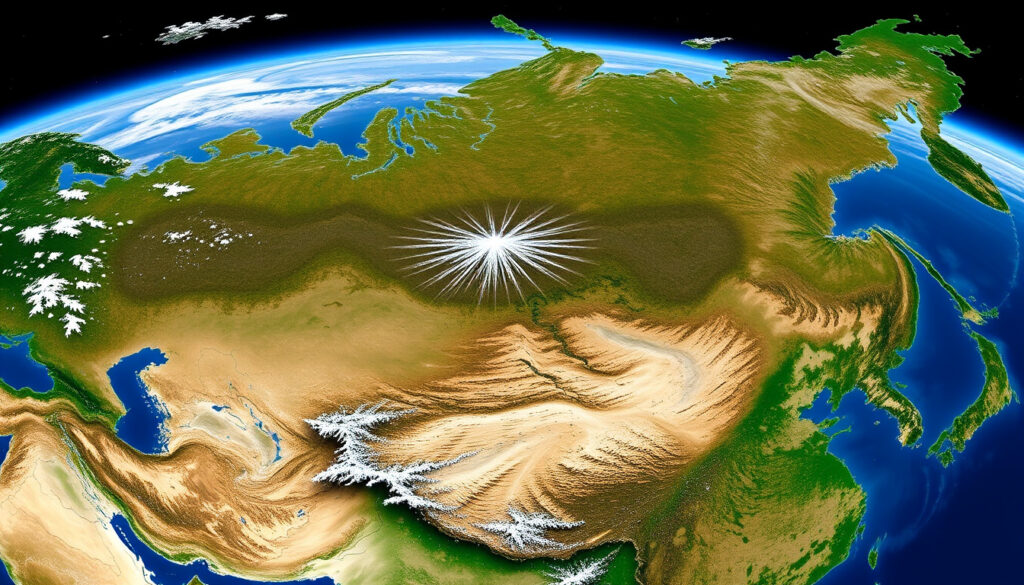
Is Russia in Europe or Asia? The Transcontinental Truth Explained
It’s one of those geography questions that seems straightforward—until you recall that Russia spans 11 time zones and more than 17 million square kilometres. The answer isn’t simply Europe or Asia; it’s both.
Total area of Russia: 17,098,246 sq km (6,601,670 sq mi) · Land area in Europe: ~3,960,000 sq km (23%) · Land area in Asia: ~13,138,000 sq km (77%) · Population in European part: ~77% (~111 million) · Population in Asian part: ~23% (~33 million) · Continental boundary: Ural Mountains, Ural River, Caucasus Mountains
Quick snapshot
- Russia is a transcontinental country spanning Europe and Asia (Encyclopaedia Britannica – geography reference)
- The Ural Mountains are the widely accepted boundary between Europe and Asia (Encyclopaedia Britannica – mountain range reference)
- Approximately 77% of Russia’s population lives in its European part (CIA World Factbook – demographic data)
- Culturally, Russia’s identity as European vs. Asian is debated (Encyclopaedia Britannica – cultural analysis)
- Minor historical disputes exist over the exact boundary line in the Caucasus region (Encyclopaedia Britannica – boundary conventions)
- The Ural Mountains have served as the conventional Europe–Asia divide since the 18th century (Encyclopaedia Britannica – historical boundary)
- Russia’s eastward expansion into Siberia began in the late 16th century, establishing its Asian presence (Encyclopaedia Britannica – imperial history)
- Russia’s expulsion from the Council of Europe in 2022 highlights its shifting European ties (Council of Europe – membership status)
- Continued debate about Russia’s political classification in European and Asian organisations will shape its alliances (OSCE – participating states list)
Six key facts that define Russia’s transcontinental identity at a glance:
| Label | Value |
|---|---|
| Official name | Russian Federation (CIA World Factbook – official data) |
| Continent(s) | Europe and Asia (transcontinental) (Encyclopaedia Britannica – geographic classification) |
| Capital | Moscow (located in Europe) (CIA World Factbook – capital city) |
| Largest city | Moscow (CIA World Factbook – largest city) |
| Time zones | 11 (CIA World Factbook – time zone count) |
| Major geographical boundary | Ural Mountains and Ural River (Encyclopaedia Britannica – physical boundary) |
Is Russia officially Asia or Europe?
Official geographic classification
- Russia is officially a transcontinental country, meaning it straddles both Europe and Asia (Encyclopaedia Britannica – transcontinental definition)
- The United Nations classifies Russia under Eastern Europe in its regional groupings (Encyclopaedia Britannica – UN classification)
- No single authority declares Russia solely Asia or solely Europe; the conventional boundary follows the Ural Mountains and Ural River (Wikipedia – continental boundaries)
The implication: the official answer is “both,” but organisational labels like the UN’s Eastern Europe region tilt the political classification westward.
Russia’s membership in European organisations
- Russia was a member of the Council of Europe until its expulsion in 2022 (Council of Europe – membership timeline)
- Russia remains a participating state in the Organisation for Security and Co-operation in Europe (OSCE) (OSCE – participating states)
- It also belongs to the Eurasian Economic Union, which includes both European and Asian post-Soviet states (Eurasian Economic Commission – union details)
What this means: Russia’s institutional ties are split—European ties weakened after 2022, while Eurasian partnerships remain strong.
Is Russia split into two continents?
The Ural Mountains as a natural divide
- The Ural Mountains run roughly north-south for about 2,500 km, forming the traditional boundary between European and Asian Russia (Encyclopaedia Britannica – Ural Mountains)
- South of the Urals, the Ural River and the Caucasus Mountains continue the line to the Caspian and Black Seas (Wikipedia – Eurasian boundary)
- No ocean separates the two continental portions—Russia’s landmass is continuous (Encyclopaedia Britannica – geography overview)
The catch: because there’s no water break, the boundary is a convention, not a hard geographic fact.
Historical reasons for the split
- European cartographers in the 18th century established the Ural divide to separate Russia’s European heartland from its Siberian expanses (Encyclopaedia Britannica – historical context)
- The conquest of Siberia (1582–1598) pushed Russia east, creating a demographic and economic split that persists today (Encyclopaedia Britannica – Siberian expansion)
Why this matters The historical split means Russia’s identity has always been dual, influencing everything from trade routes to military strategy.
Is any part of Russia in Europe?
European Russia: geography and population
- Yes—about 23% of Russia’s land area lies in Europe, west of the Ural Mountains (Encyclopaedia Britannica – land area breakdown)
- That European slice houses roughly 77% of the country’s population (CIA World Factbook – population distribution)
- European Russia covers about 3.96 million square kilometres (CIA World Factbook – area figures)
The pattern: a small patch of land holds the vast majority of people—a classic demographic paradox.
Major cities in European Russia
- Moscow, the capital, is Europe’s largest city proper by population (Encyclopaedia Britannica – Moscow profile)
- Saint Petersburg, Russia’s second city, also sits in the European part (CIA World Factbook – Saint Petersburg)
- Other major European cities include Kazan, Nizhny Novgorod, and Rostov-on-Don (Encyclopaedia Britannica – urban centres)
Why is Russia considered Europe?
Historical and cultural ties to Europe
- Russia’s political and cultural heartland lies in Europe, centred on Moscow and Saint Petersburg (Encyclopaedia Britannica – cultural identity)
- The Russian Orthodox Church, the Cyrillic alphabet, and legal traditions draw heavily from Byzantine and Western European influence (Encyclopaedia Britannica – historical influence)
- Most of Russia’s major historical events—the Tsardom, the Russian Empire, the 1917 Revolution—unfolded west of the Urals (Encyclopaedia Britannica – Russian history)
The trade-off: despite this European identity, Russia’s foreign policy often pivots eastward, especially in energy and trade.
Political and economic alignments
- Russia is a member of the European-dominated OSCE and was a Council of Europe member until 2022 (Council of Europe – Russia expulsion)
- It also leads the Eurasian Economic Union, linking it to Asian neighbours like Kazakhstan and China (Eurasian Economic Commission – member states)
- The European Union does not include Russia, and tensions since 2022 have deepened the divide (Encyclopaedia Britannica – EU relations)
“Russia is a transcontinental country, with its vast territory spanning both Europe and Asia.”
— Encyclopaedia Britannica
According to the United Nations Statistics Division, “Russia is classified under Eastern Europe.” UN classification reference
What is the population distribution between European and Asian Russia?
Urban centres in each part
- European Russian cities: Moscow (pop. ~12 million), Saint Petersburg (~5.4 million), Kazan (~1.3 million) (CIA World Factbook – city populations)
- Asian Russian cities: Novosibirsk (~1.6 million), Yekaterinburg (~1.5 million, straddling the border), Vladivostok (~600,000) (Encyclopaedia Britannica – Siberian cities)
- Novosibirsk is the largest city east of the Urals (Encyclopaedia Britannica – Novosibirsk overview)
Economic activity and density
- European Russia accounts for over 70% of the country’s GDP, driven by manufacturing, services, and finance (Encyclopaedia Britannica – economic geography)
- Asian Russia (Siberia and the Far East) is rich in natural resources but has a population density of fewer than 3 people per square kilometre (Encyclopaedia Britannica – Siberia demographics)
- Oil, gas, coal, and mineral extraction dominate the Asian part, making it crucial for exports (Encyclopaedia Britannica – resource economy)
European Russia vs. Asian Russia: a side-by-side look at the key differences:
| Aspect | European Russia | Asian Russia |
|---|---|---|
| Land area | ~3.96 million sq km (23%) (Britannica – area) | ~13.14 million sq km (77%) (Britannica – area) |
| Population | ~111 million (77%) (Britannica – population) | ~33 million (23%) (Britannica – population) |
| Largest city | Moscow (~12 million) (CIA – Moscow) | Novosibirsk (~1.6 million) (Britannica – Novosibirsk) |
| Primary economic base | Manufacturing, services, finance (Britannica – economy) | Natural resources (oil, gas, minerals) (Britannica – resources) |
The contrast: European Russia packs people and industry; Asian Russia holds the land and wealth underground. Both define the country.
Confirmed facts
- Russia is transcontinental, with territory in both Europe and Asia (Britannica)
- Ural Mountains form the conventional Europe–Asia boundary (Britannica)
- About 77% of Russians live in European Russia (CIA)
What’s unclear
- Russia’s cultural identity as primarily European or Asian remains debated (Britannica)
- Minor disputes exist over the boundary’s exact path in the Caucasus (Britannica)
- The extent to which Russia’s future political alignment will be European versus Eurasian is uncertain (Council of Europe)
- Continental boundaries are conventional, not natural, leading to varying classifications (Britannica – Europe)
“The Ural Mountains are the traditional dividing line between European Russia and Siberian Russia.”
— Encyclopaedia Britannica
Russia’s dual-continent reality has practical consequences. For investors and policymakers watching Russian energy exports, the bulk of oil and gas originates in the Asian side, while the political capital remains in the European side. For the average traveller, flying from Moscow to Vladivostok is a seven-hour journey across two continents—a reminder of scale that defines the country.
mapsofworld.com, worldatlas.com, en.wikipedia.org, worldpopulationreview.com
Understanding Russias transcontinental geography helps clarify why the world’s largest country belongs to both Europe and Asia simultaneously.
Frequently asked questions
Does Russia belong to the European continent?
Partially. Russia’s western portion, west of the Ural Mountains, is geographically considered part of Europe. The UN groups Russia under Eastern Europe (Britannica).
Is Russia considered part of Asia?
Approximately 77% of Russia’s land area lies in Asia, east of the Urals. However, classification varies by context—geographically yes, politically often no (Britannica).
What is the Ural River?
The Ural River flows from the Ural Mountains into the Caspian Sea and, together with the mountains, forms part of the conventional Europe–Asia boundary (Wikipedia – Ural River).
How many time zones does Russia have?
Russia spans 11 time zones, from UTC+2 in Kaliningrad to UTC+12 in Kamchatka (CIA World Factbook).
What is the religion distribution across European and Asian Russia?
Orthodox Christianity dominates in European Russia, while Asian Russia has a mix of Orthodox, Muslim, Buddhist, and indigenous religions (Britannica – religion).
Which continent does Siberia belong to?
Siberia is entirely within Asia. It covers most of Russia’s Asian territory, from the Urals east to the Pacific (Britannica – Siberia).
Related reading: Smallest Country in the World · How Many People Are in the World 2025
More related posts
 Denis Sulta: Real Name, Wife, Age, Music & Biography
 Luton Town Transfer Rumours 2025: Latest News & Signings
 Weather in Manchester Today: 19°C Sunny, Max 22°C Amid Storm Amy
 Breakfast Bar: Complete Guide with Dimensions, Pros, Cons & Ideas
 Donald Trump Latest News – Critical Political Shifts
 Crystal Palace vs Man City – Postponed Due to Fixture Clash
 Pigs in a Blanket: Recipes, Origins & Global Names