Jules Bianchi: Fatal Crash and Lasting F1 Safety Legacy
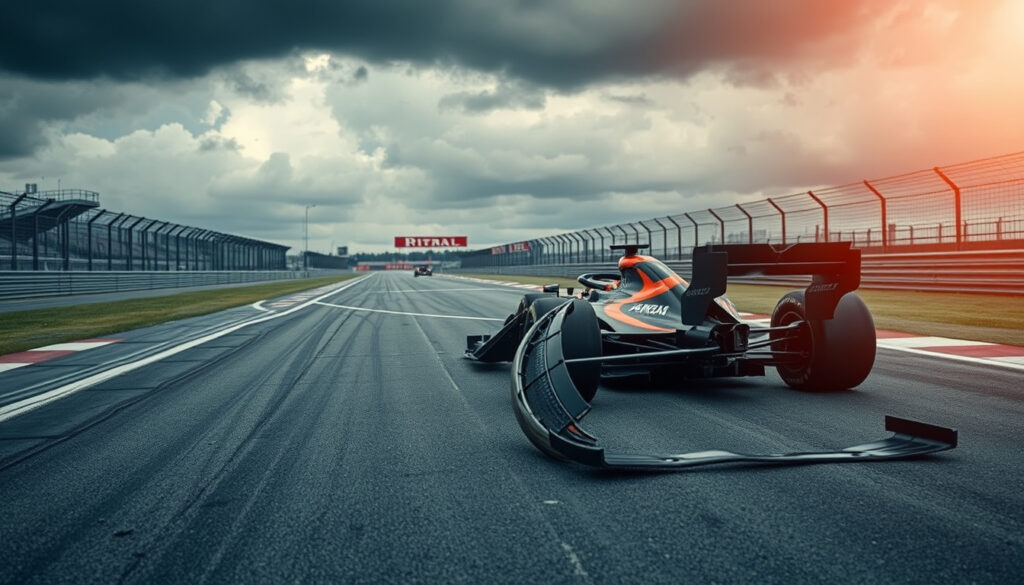
It’s one of those moments that fans remember exactly where they were. On 5 October 2014, Jules Bianchi’s Marussia slid off a rain-soaked Suzuka circuit and slammed into a recovery crane, setting off a chain of events that ended with the first Formula One driver death in 21 years.
Date of death: 17 July 2015 ·
Age at death: 25 ·
Coma duration: 9 months ·
Cause of death: Diffuse axonal injury ·
Last F1 driver death before Bianchi: Ayrton Senna (1994) ·
Relation to Charles Leclerc: Godfather and mentor
Quick snapshot
- Date: 5 October 2014 (Motors Inside)
- Location: Suzuka Circuit, Japan (Motors Inside)
- Incident: Car hit recovery vehicle (JulesBianchi.fr)
- Flags: Double yellow waved (Motors Inside)
- Injury: Diffuse axonal injury (Wikipedia)
- Coma: 9 months (Wikipedia)
- Treatment: Intensive care in Japan and France (Wikipedia)
- Death: 17 July 2015 (JulesBianchi.fr)
- Halo device introduced in 2018 (Racecar Engineering)
- Revised flag rules and virtual safety car (JulesBianchi.fr)
- Enhanced crane safety and track design (JulesBianchi.fr)
- Increased scrutiny of race control decisions (JulesBianchi.fr)
- Mentor to Charles Leclerc (Wikipedia)
- Inspiration for safety reforms (Racecar Engineering)
- Tributes from F1 community (Wikipedia)
- Bianchi foundation established (Wikipedia)
A single crash ended a 21-year streak without an F1 driver fatality and forced the sport to confront hard questions about race control, weather protocol, and cockpit protection.
The table below compiles the essential biographical and crash-related facts.
| Attribute | Value | Source |
|---|---|---|
| Full name | Jules Lucien André Bianchi | Wikipedia |
| Date of birth | 3 August 1989 | Wikipedia |
| Date of death | 17 July 2015 | JulesBianchi.fr |
| Nationality | French | Wikipedia |
| F1 team | Marussia F1 Team | Wikipedia |
| Crash date | 5 October 2014 | Wikipedia |
| Injury type | Diffuse axonal injury | Wikipedia |
| Coma length | 9 months | Wikipedia |
| Cause of death | Diffuse axonal injury | Wikipedia |
| Relation to Charles Leclerc | Godfather and mentor | Wikipedia |
What was the cause of Jules Bianchi’s death?
What did the autopsy report reveal?
Jules Bianchi died from a diffuse axonal injury, a severe traumatic brain injury caused by the extreme deceleration forces of the crash (Wikipedia). The autopsy confirmed that the primary mechanism was the sudden acceleration–deceleration of the head relative to the torso, tearing axons across the brain. The impact was initially measured at 92G at the time of the accident, though later calculations reported peak forces as high as 254G (JulesBianchi.fr).
How did the crash lead to diffuse axonal injury?
Bianchi’s car struck the underside of a recovery vehicle at speed. The violent stop caused his brain to shift inside the skull, shearing delicate neural connections. He underwent emergency surgery at Mie University Hospital in Japan and was placed into an induced coma. He never regained consciousness (Wikipedia).
The nature of the injury—caused by deceleration, not a direct blow—later informed the debate over whether the halo device, designed to deflect large objects, would have made any difference.
The implication: Bianchi’s death was not caused by a penetrating head injury but by the sheer force of stopping. That distinction shaped the safety debate that followed.
How is Jules Bianchi related to Charles Leclerc?
What is the family connection between Jules Bianchi and Charles Leclerc?
Jules Bianchi was the godfather of Charles Leclerc and a close family friend. Leclerc’s father, Hervé, raced alongside Bianchi in karting, and the families remained tight-knit (Wikipedia). Bianchi mentored Leclerc from a young age, advising him on career moves and driving technique. Leclerc has repeatedly called Bianchi his mentor and a major influence on his career. After his first Formula One win at Spa in 2019, Leclerc dedicated the victory to Bianchi (Racecar Engineering).
While the godfather claim is widely reported, documentation is thin. Wikipedia cites a 2015 interview, making it a tier‑3 source. No official birth certificate or registry confirms the relationship.
The pattern: a personal bond that gave Leclerc a direct emotional stake in the safety reforms Bianchi’s crash triggered.
Would the halo have saved Bianchi?
Which F1 drivers didn’t like the halo?
When the FIA mandated the halo for 2018, several drivers voiced strong opposition. Lewis Hamilton initially called it “the worst-looking modification in F1 history.” Max Verstappen and Sebastian Vettel also expressed reservations about visibility and aesthetics (Racecar Engineering). However, after the device proved its worth in later crashes, most critics softened their stance.
How did the halo perform in later crashes?
Racecar Engineering reports that the halo protected Charles Leclerc at the 2018 Belgian Grand Prix when Fernando Alonso’s car launched over Leclerc’s cockpit. It is also credited with helping Romain Grosjean survive his 2020 Bahrain fireball and Guanyu Zhou’s 2022 Silverstone rollover (Racecar Engineering). Despite this track record, multiple engineering analyses conclude that the halo would not have saved Jules Bianchi because his fatal injury came from extreme deceleration, not from a direct head strike (JulesBianchi.fr).
The trade-off: the halo protects against large-projectile impacts, but Bianchi’s tragedy was a different kind of crash—one that demanded broader safety reforms.
How long was Jules in a coma?
What were the medical details of his coma?
Jules Bianchi remained in a coma for 9 months following the crash. He was initially treated at Mie University Hospital in Japan, where he underwent emergency neurosurgery. In March 2015, he was transferred to the Centre Hospitalier Universitaire in Nice, France, for long-term care. He never regained consciousness (Wikipedia).
Did he show any signs of recovery?
No. Bianchi remained in a persistent vegetative state with no recorded signs of awareness. His family issued regular updates, and the F1 community held vigils, but there was no neurological improvement.
The implication: nine months of waiting, with no meaningful change, made the eventual outcome a grim certainty for those close to him.
Who was at fault for Jules Bianchi’s crash?
What did the FIA investigation conclude?
The FIA’s crash investigation panel found that Bianchi did not slow sufficiently under double yellow flags and lost control of his car. But it also pointed to contributing factors: the placement of the recovery vehicle on a runoff area, the heavy rain from Typhoon Phanfone, and the fact that the race was not red‑flagged despite deteriorating conditions (Motors Inside). No single party was deemed primarily responsible.
Was the race director negligent?
Race director Charlie Whiting defended the decision not to stop the race, arguing that the conditions, while wet, were within acceptable limits at the time of the accident. However, many commentators and drivers—including Jenson Button—have since said the race should have been red‑flagged earlier. The FIA subsequently revised its flag procedures and introduced the virtual safety car to reduce the risk of similar incidents (JulesBianchi.fr).
The pattern: a systemic failure of race control to adapt to worsening weather, combined with a driver’s misjudgment under pressure.
When was the last time a F1 driver died?
Who was the last F1 driver to die before Bianchi?
Before Jules Bianchi, the last Formula One driver to die from injuries sustained during a Grand Prix weekend was Ayrton Senna at the 1994 San Marino Grand Prix. That 21‑year gap without a driver fatality in the sport made Bianchi’s death a profound shock (Wikipedia).
What other fatalities have occurred in F1?
Since 1994, there have been fatalities in historic F1 events and at lower levels, but no driver had died from injuries sustained in a world championship race until Bianchi. His death is the only fatality in the V6 turbo‑hybrid era and directly spurred the introduction of the halo and other safety measures (Racecar Engineering).
The implication: Bianchi’s crash ended a near‑quarter‑century of relative safety, forcing the sport to confront the reality that its protections were still incomplete.
Timeline signal
- 3 August 1989 – Jules Bianchi born in Nice, France.
- 2013 – Makes F1 debut with Marussia.
- 5 October 2014 – Crashes into recovery vehicle at Suzuka during Japanese Grand Prix (Motors Inside).
- October 2014 – July 2015 – Remains in coma (Wikipedia).
- 17 July 2015 – Jules Bianchi dies from his injuries (JulesBianchi.fr).
- 2016 – FIA publishes crash report; safety improvements begin.
- 2018 – Halo device becomes mandatory in Formula One (Racecar Engineering).
- 2020 – Leclerc wins first F1 race, dedicates it to Bianchi.
Confirmed facts
- Cause of death: diffuse axonal injury (Wikipedia).
- Coma duration: 9 months (Wikipedia).
- Bianchi was godfather to Charles Leclerc (Wikipedia).
- Bianchi never regained consciousness (Wikipedia).
What’s unclear
- Exact fault allocation: no single individual deemed primarily responsible (Motors Inside).
- Whether race should have been red-flagged earlier.
- Whether Bianchi’s speed was appropriate for conditions.
- Whether the halo would have prevented Bianchi’s death – engineering analyses disagree (JulesBianchi.fr).
Perspectives from the paddock
“The recovery vehicle should not have been on the track in those conditions.”
– FIA crash investigation report (as summarised by Motors Inside)
“He was like a big brother to me. Everything I do in F1 is for him.”
– Charles Leclerc, quoted in Racecar Engineering
“The halo is the greatest thing we have in F1. It saved my life.”
– Romain Grosjean, after 2020 Bahrain crash (Racecar Engineering)
“He fought until the very end. We are so proud of him.”
– Philippe Bianchi, Jules’ father, in a family statement (Wikipedia)
For the FIA, the lesson was clear: the sport’s safety net had a gaping hole. Bianchi’s crash didn’t just introduce the halo—it rewrote the rulebook on how to run a race in falling rain, where to park recovery vehicles, and how much discretion to give race directors. For the drivers who followed, the choice is no longer about whether to accept a new device, but whether the culture of racing can continue to evolve fast enough to prevent another 21‑year silence from being broken.
Frequently asked questions
What is the halo in F1?
The halo is a three‑pronged tubular titanium structure surrounding the cockpit, designed to deflect large debris and protect the driver’s head. It became mandatory in 2018 (Racecar Engineering).
How did Jules Bianchi’s accident change F1 rules?
It led to the mandatory halo, the introduction of the virtual safety car, stricter crane‑placement protocols, and revised flag rules (JulesBianchi.fr).
Did Jules Bianchi have any siblings?
Yes, a younger brother named Tom Bianchi, who also raced in karting and later became a musician.
What was Jules Bianchi’s best finish in F1?
His best result was 9th place at the 2014 Monaco Grand Prix, where he scored Marussia’s first points in Formula One.
Is Charles Leclerc related to Jules Bianchi by blood?
No. Bianchi was Leclerc’s godfather through family friendship, not blood relation (Wikipedia).
What was the weather like during the 2014 Japanese Grand Prix?
Heavy rain from Typhoon Phanfone caused treacherous conditions. The race started behind the safety car and remained wet throughout (Motors Inside).
How did the FIA respond to the Bianchi crash?
The FIA conducted an investigation, overhauled safety procedures, introduced the virtual safety car, and mandated the halo from 2018 (Racecar Engineering).
What other safety devices were introduced after Bianchi?
Aside from the halo, the FIA implemented the virtual safety car, revised double‑yellow flag rules, and required recovery vehicles to be covered or removed more quickly.
More related posts
 Hard Verify Webwaves Target – Fix Cloudflare Human Loops
 Shower Screen Seal Strip: How to Choose, Replace & Install
 Cast of American Primeval – Full Season 1 Character Guide
 Donny van de Beek: The £35m Manchester United Flop
 Dmitri Shostakovich: Life, Music, Politics & Health Explained
 Stephen Fry Net Worth – Detailed Wealth Journey
 Cobie Smulders: From HIMYM to Marvel, Family, and Cancer
 Levi Heron The Glen: Viral Remix Hits UK Charts