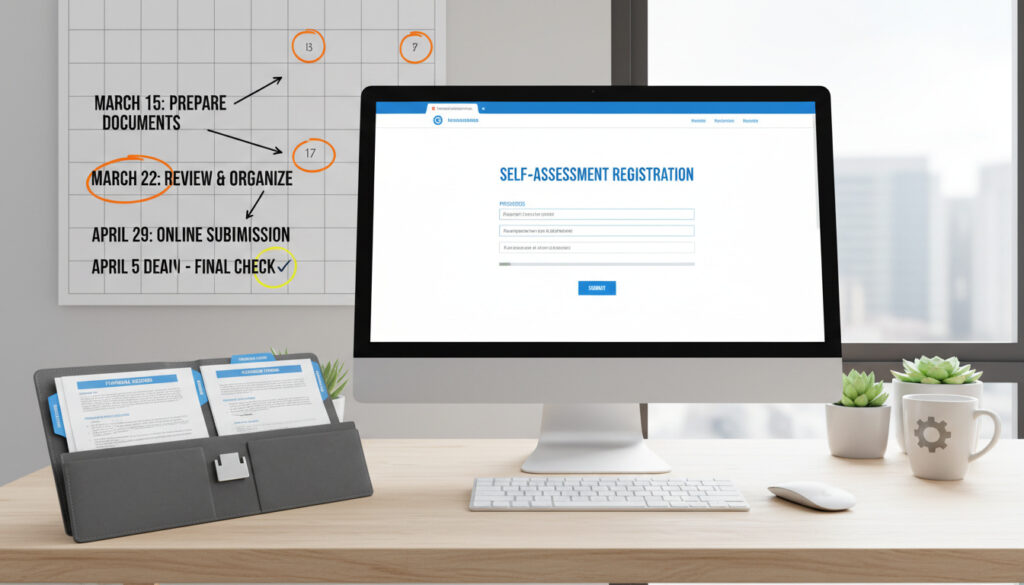
Register For Self Assessment – Easy Steps And Deadlines
Registering for self assessment is a key process for anyone in the UK earning untaxed income. This includes self-employed people, freelancers, landlords, and others whose earnings are not covered by PAYE. Understanding the steps, timing, and requirements helps ensure compliance and avoid penalties.
With tax rules regularly updated, accurate information and timely registration are essential. The process is governed by clear eligibility criteria, specific documentation, and strict deadlines set by HMRC. Missing these requirements can result in fines or delays in issuing essential tax references for filing your returns.
The following guide uses verified sources, including government documentation and specialist tax advice, to clarify the full registration journey for 2025 and beyond.
How do I register for self assessment?
- Process Overview: Concise steps outlining the registration process.
- Eligibility Criteria: Key points about who qualifies for self assessment.
- Required Documents: List the essential documents needed for registration.
- Deadline & Timing: Important dates and deadlines for registering.
- Registration can be completed through the official HMRC Self Assessment service.
- Both online and postal options are available, with online being faster.
- Receiving your Unique Taxpayer Reference (UTR) generally takes 14–21 working days after applying.
- Late registration may result in penalties or delays processing your tax return.
- Essential documentation includes your National Insurance number and contact details.
- Eligibility depends on untaxed income streams or certain employment statuses.
- Step-by-step instructions help minimise mistakes during registration.
| Eligibility | Deadline | Required Documents | Process Duration |
|---|---|---|---|
| Self-employed, landlords, company directors, others with untaxed income | 5 October following tax year end | NI number, full name, address, contact info, employment details | 14–21 working days (postal), faster if using HMRC app |
| Anyone earning £1,000+ self-employment income | Annually by 5 October | P60/P45, rental income records, investment/dividends | Up to 4 weeks by post |
| Company directors and those with side income | 5 October (relevant to each year) | Pension, charity donation records | 10 minutes for online application |
| First-time tax return filers without prior registration | Strictly enforced; penalties for late entry | Evidence of prior registration if applicable | Immediate account setup after UTR receipt |
What are the requirements for self assessment registration?
Who is required to register for self assessment?
Any individual with untaxed income above £1,000 from self-employment, property letting, investments, or freelance work must register for self assessment. This also includes company directors, landlords, and side hustle earners whose income isn’t completely taxed through PAYE, as outlined on CTT Group and HMRC’s official guidelines.
What documents are needed for registration?
For online registration, you will need a National Insurance number, date of birth, full name (including former names), gender, address and move-in date, phone, email, and details regarding prior registration or business activities. For completing the tax return after registration, documentation such as P60s, P45s (if applicable), rental income records, investment statements, self-employment receipts, pension, and charity contribution proof should be prepared.
Key documents include your NI number, official identification details, employment history, and records showing untaxed income. Gathering these in advance helps avoid delays during the online or postal registration process (source).
How to use the HMRC online and postal registration routes
Registration is typically completed online by creating or logging into a Government Gateway account via the official government portal. For those unable to register online, an SA1 form or CWF1 (for sole traders) can be sent by post, with processing times of up to four weeks as noted by Anna Money. The UTR is sent by mail or is available more quickly in the HMRC app.
When should you register for self assessment?
Registration deadlines and timescales for 2025
For the 2024/25 tax year (ending 5 April 2025), individuals must register by 5 October 2025. Online tax returns must then be filed by 31 January 2026. UTR numbers are usually issued within 14–21 working days after registration. Registering as early as possible is recommended to avoid delays and complications before the deadline (Trueman Brown).
Missing the 5 October deadline may result in financial penalties and additional interest charges, as confirmed by HMRC. Those who fail to register in time should contact HMRC promptly to limit potential penalties (https://hnry.co.uk/resources/glossary/how-to-register-for-self-assessment/).
Impact of Making Tax Digital in 2026
From April 2026, sole traders and landlords with annual turnovers above £50,000 must use digital tools to keep records and file updates, according to HMRC announcements. This shift will primarily affect future filers, but the registration requirements remain consistent for the 2024/25 year.
Timeline: What are the main stages in registering for self assessment?
- Initial application submission via the HMRC portal or by post (https://www.gov.uk/register-for-self-assessment).
- Verification of identity and eligibility by HMRC (SelfTax Blog).
- Receiving the Unique Taxpayer Reference (UTR) by post or app (within 14–21 days) (Trueman Brown).
- Final confirmation and account activation through Government Gateway for tax return filing (https://ctt-group.co.uk/accountancy/how-to-register-for-self-assessment-for-the-2025-26-tax-year/).
What is confirmed and what is still uncertain about self assessment registration?
| Confirmed Information | Areas That Remain Unclear |
|---|---|
| 5 October is the strict registration deadline after tax year end. UTR issued within known timeframes. Process and documents required are detailed by HMRC. | Processing speed for UTR may vary. Individual cases may experience delays or require extra evidence. Late penalty conditions and mitigation are case-specific. |
| Digital tax filing requirements coming in April 2026 for certain incomes. | It is unclear whether exemption or grace periods may be granted in exceptional cases without official announcement. |
| Both online and postal routes remain available for 2025 registration. | Predicting the exact turnaround time for postal forms due to possible HMRC backlogs. |
What is the broader context of self assessment registration?
Self assessment is the UK’s primary mechanism for individuals with untaxed earnings to declare income, calculate liabilities, and ensure HMRC receives correct tax payments. The process reflects legislation aiming to close gaps left after PAYE, especially for self-employed, landlords, and those with side incomes. For most, registration triggers the start of reporting obligations and eligibility to claim business-related deductions or reliefs.
As the digitalisation of tax reporting progresses, the underlying requirements for eligibility, documentation, and deadlines continue to be shaped by annual policy updates. HMRC regularly reviews these guidelines, making timely adherence essential for all filers.
Credible sources and tax expert commentary
“You must register by 5 October if you need to complete a Self Assessment tax return for the previous tax year. If you miss this deadline, you could be fined.”
https://www.gov.uk/register-for-self-assessment
“Documents required for registration include your National Insurance number, current address, and details of any previous self assessment registration.”
https://hnry.co.uk/resources/glossary/how-to-register-for-self-assessment/
“Register early to avoid any processing backlogs, especially approaching deadlines. Accessing your UTR via the HMRC app may accelerate confirmation.”
https://truemanbrown.co.uk/register-for-self-assessment-2024-25-guide/
What should you do next when registering for self assessment?
Before registering, check HMRC eligibility tools, gather all required documents, and choose your preferred registration method. Early action reduces risks of delays and penalties. For step-by-step instructions and deeper insights into the self-employed process, visit A guide to Self Assessment for the Self-Employed. Additionally, explore our internal resources on registration procedures for further clarity.
Frequently asked questions about registering for self assessment
How is self assessment tax calculated?
What happens if I register late for self assessment?
Can I update my registration details after submission?
Are there any fees involved in registering for self assessment?
More related posts
 Ford Ecosport For Sale – New 2026 Pricing Update
 Live and Let Die – James Bond Film, Song, Phrase Explained
 Weather in Manchester Today: 19°C Sunny, Max 22°C Amid Storm Amy
 Can You Reheat Prawns – Safe Steps For Tasty Seafood
 Plenty of Fish App: Free Messaging, Senior Dating & More
 NARS Sheer Glow Foundation – Radiant Skin That Lasts
 Busiest Airport in the World – Updated Rankings Insight
 Bayern Munich Vs Sc Freiburg Lineups – Expert Tactics