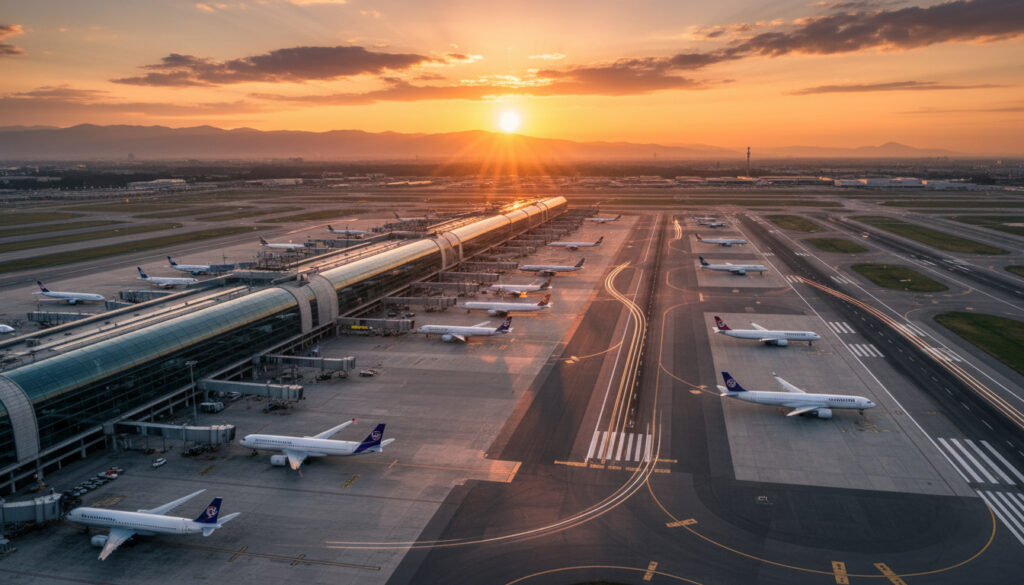
Busiest Airport in the World – Updated Rankings Insight
Global air travel has rebounded, with airport rankings shifting as hubs race to support rising traffic. The contest for the title of the busiest airport in the world centers on passenger numbers, seat capacity, and aircraft operations—each lens offering a different leader.
While North American and Middle Eastern gateways stand out in both passenger and operational volume, the specific methodologies used profoundly affect which airport claims the top spot. Trends also reveal the growing influence of international travelers and regional hubs rewrite long-standing rankings.
Which airport is currently the busiest in the world?
106.3 million (ATL, 2025)
Not leading among top global cargo hubs; passenger-centric
807,625 (ATL, 2025)
1st by passengers; 1st by seat capacity
- Atlanta Hartsfield-Jackson (ATL) leads in total passenger traffic for 2025 with 106.3 million travelers.
- Dubai International (DXB) surpasses all others in international seat capacity, serving 62.4 million seats in 2025.
- Chicago O’Hare operates the highest number of aircraft movements, indicating a different operational intensity.
- Shifts in methodology (passengers, seats, flights) cause significant variation in rankings.
- Passenger growth at Dubai demonstrates post-pandemic recovery, exceeding even pre-2019 levels.
- Airports like Istanbul have rapidly advanced their positions, reflecting changing global travel routes.
- Growth rates among leading airports have begun to normalize after the volatility of recent years.
| Metric | 2025 | 2024 | 2019 |
|---|---|---|---|
| ATL Passengers | 106.3M | n/a | ~107M |
| DXB Passengers | 95.2M | 92.3M | 86.3M |
| ATL Seat Capacity | 63.1M | ~62.5M | ~63M |
| DXB International Seats | 62.4M | n/a | n/a |
| Aircraft Movements (ORD) | 857,392 | n/a | n/a |
| Tourist Arrivals (Dubai) | 19.6M | n/a | n/a |
How is the title of ‘busiest airport’ determined?
Which metrics drive global airport rankings?
The designation “busiest airport” can indicate several different leaders, depending on the metric chosen. Primary criteria include total passenger traffic (boardings, disembarkations, and direct transits), seat capacity (indicative of airline network size), and operational counts such as aircraft movements. International versus domestic distinction further diversifies the rankings, with Dubai International leading international seat capacity and Atlanta dominating total passenger numbers.
Airports Council International and other authorities utilize multiple metrics: annual passenger numbers, monthly seat capacity, aircraft movements, and the breakdown between international and domestic traffic. Rankings change significantly when using these different criteria.
How do passenger and cargo operations compare?
While the world’s busiest airports by passengers or seats do not always lead in cargo volumes, they often act as vital global hubs. Atlanta and Dubai are passenger-focused, whereas airports like Hong Kong and Memphis dominate cargo rankings. The distinction is crucial as some airports lead specific sectors without ranking highest overall.
What role do aircraft movements play?
Aircraft movements—takeoffs and landings—are another important measure. Chicago O’Hare, for example, recorded more operations than Atlanta in 2025. However, this does not automatically equate to higher passenger volume, as flight sizes and schedules vary.
A higher number of aircraft movements often indicates more short-haul or frequent flights with smaller aircraft. Conversely, a lower movement count with high passenger numbers may reflect more large-capacity or long-haul flights.
How have busiest airport rankings evolved over time?
Historical shifts in top airport positions
The busiest airport in the world title has evolved due to shifts in global travel patterns, economic development, and infrastructure investment. Atlanta Hartsfield-Jackson has maintained a lead in total passenger traffic for decades. However, Dubai International has climbed rapidly by expanding its international network and capitalizing on a strategic geographic position connecting continents.
Pandemics and external disruptions
The COVID-19 pandemic caused unprecedented upheaval in airport rankings. International hubs saw sharp declines, while domestic-focused facilities in the U.S. rebounded more quickly. Dubai’s recovery and eventual surpassing of 2019 levels signal resilience and renewed demand for international travel.
Global events like pandemics, airspace closures, and regulatory changes can cause abrupt shifts in airport rankings. These factors may lead to temporary departures from historical traffic patterns.
Trends shaping the future
Infrastructure expansions and changing economic centers are forecast to alter future airport rankings. Dubai’s plans to migrate operations to Al Maktoum International aim to sustain growth, while Istanbul’s rise marks broader geographic shifts. Recovery trajectories after the pandemic display varied regional momentum, with Asia-Pacific and Middle Eastern airports gaining prominence.
Key milestones in the evolution of the busiest airport in the world
- – Dubai International records 86.3 million passengers, Atlanta remains global passenger leader. [Source]
- – COVID-19 forces dramatic declines; domestic U.S. airports temporarily outpace international hubs.
- – Dubai International handles 92.3 million passengers, approaching pre-pandemic highs. [Source]
- – Hartsfield-Jackson Atlanta handles 106.3 million passengers; Dubai International sets a new international traffic record with 62.4 million international seats. [Source]
- – Dubai leads global monthly seat capacity (4.90 million seats), with Atlanta and Shanghai following. [Source]
- – Plans underway for Dubai’s transition to Al Maktoum International to accommodate continued growth. [Source]
What is established about airport rankings—and what remains uncertain?
| Well-Established Data | Remaining Uncertainties |
|---|---|
| Official annual passenger figures for leading airports (ATL, DXB) | Future growth rates, especially with planned infrastructure expansion |
| Seat capacity data from industry sources | Impact of global disruptions on long-term trends |
| Aircraft movement statistics (ORD, ATL) | Effect of emerging technologies on airport capacity |
| Monthly seat and passenger updates for 2026 | Exact timelines for infrastructure shifts (e.g., Dubai’s airport migration) |
| Tourism’s role in passenger growth (Dubai) | Potential regulatory or policy changes |
How do airport rankings fit into the broader aviation context?
Airport traffic rankings reflect changing patterns in global mobility, shifting business and leisure travel, and infrastructure investment. Sustained growth at Middle Eastern hubs like Dubai and Istanbul signals an eastward shift in aviation gravity, fueled by tourism, new routes, and flexible network planning. Meanwhile, longstanding leaders like Atlanta maintain primacy through extensive domestic networks and stable operations. For further details, refer to World’s Busiest Airport: Comprehensive Analysis.
Diverse measurement methods ensure no single airport leads all metrics, underscoring the complexity behind the title “busiest airport.” Ongoing adjustments to capacity, regulatory frameworks, and passenger demand suggest that this global landscape will remain dynamic.
Official sources and expert commentary on the world’s busiest airports
“Ongoing recovery and growth, particularly in international traffic, are redefining airport rankings globally.”
Airport Council International
“Seat capacity offers a forward-looking view of airport network size, often forecasting future leaders even before passenger numbers catch up.”
International Air Transport Association
What is the outlook for the busiest airport in the world?
The title of the busiest airport in the world remains closely contested and dependent on measurement. With infrastructure projects, evolving airline strategies, and shifting travel demand, future leaders will likely emerge from a dynamic mix of established and up-and-coming hubs. For a detailed review of ongoing developments, consult World’s Busiest Airport: Comprehensive Analysis.
FAQ
What are the main factors that contribute to an airport’s ranking?
Core factors include total passenger numbers, seat capacity, aircraft movements, and the share of international versus domestic flights.
How often are airport rankings updated?
Major aviation bodies publish annual statistics, while monthly updates are available for some metrics such as seat capacity.
What is the difference between passenger and cargo statistics?
Passenger statistics measure the number of travelers, while cargo statistics account for freight and mail handled—airports rarely lead both at once.
How have global events impacted airport traffic recently?
Events like the COVID-19 pandemic drastically reduced international traffic and reshaped the hierarchy of the busiest airports worldwide.
Which metrics should travelers consider when evaluating airport efficiency?
Relevant measures include on-time performance, passenger volume, transfer connectivity, and frequency of flights.
More related posts
 Lance Reddick Movies and TV Shows – Complete Filmography Guide
 TV Stand With Storage – Top Picks and Size Guide
 RIBA Plan of Work 2020: 8 Stages Overview and Guide
 Harry Potter HBO Series: Cast, Premiere & Renewal News
 Weather in Manchester Today: 19°C Sunny, Max 22°C Amid Storm Amy
 Cast of Malcolm in the Middle – Enduring TV Legacy
 Backlinks – Så rankar du högre med rätt länkar
 Apple iPhone 15 Pro Max – UK Price, Specs and Deals